








LNG Storage Tank Safety Standards and Regulatory Compliance
The liquefied natural gas industry has grown at a remarkable pace over the past two decades, and with that growth comes an ever-tightening web of safety regulations governing how these facilities are designed, built, and operated. For anyone involved in procuring or operating an LNG storage installation, understanding the regulatory landscape is not optional — it is foundational. Skipping corners on compliance does not just risk fines and shutdowns; it risks lives. A storage tank manufacturer worth partnering with will have these standards baked into every stage of their engineering process, from initial design review through final hydrostatic testing.

The Role of NFPA 59A in LNG Facility Design
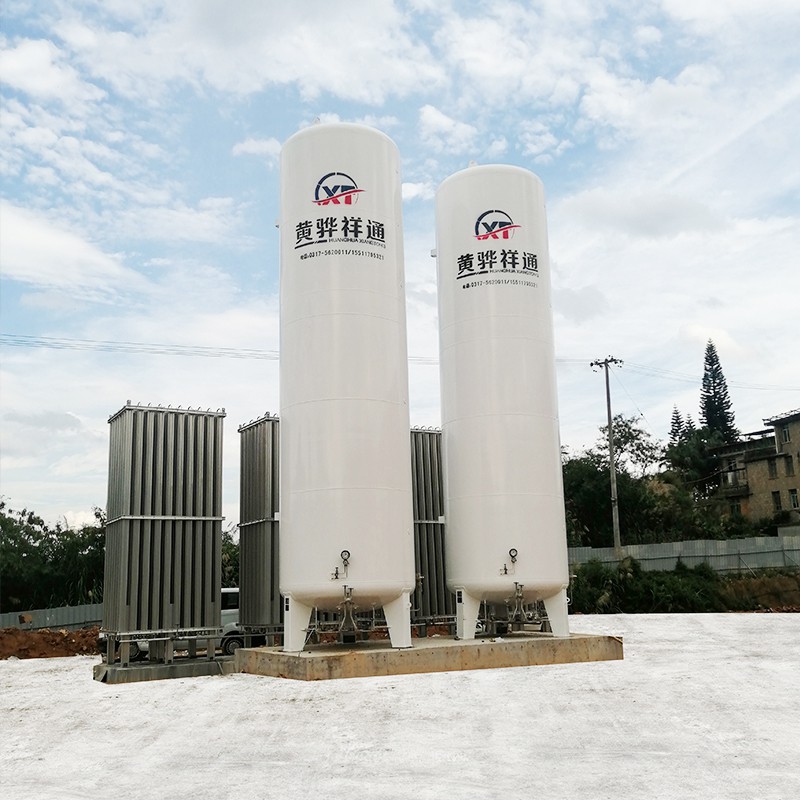
In the United States and many other jurisdictions that have adopted American codes, NFPA 59A serves as the primary standard governing the production, storage, and handling of liquefied natural gas. The document establishes minimum requirements for tank siting distances, impounding areas, thermal radiation exclusion zones, and ventilation systems. One of the most consequential provisions in NFPA 59A relates to spill containment. The standard requires that LNG storage installations include an impoundment basin capable of holding the entire contents of the largest tank, with provisions to prevent the LNG from migrating beyond the containment area or entering drains, sewers, or waterways. The standard also specifies that containment dikes must be designed to withstand the thermal effects of a pool fire for a minimum duration, typically two hours for single-containment systems. These requirements directly influence the layout and footprint of any LNG storage project, which is why early collaboration between the facility owner and the tank supplier is so valuable.
ASME Boiler and Pressure Vessel Code Requirements
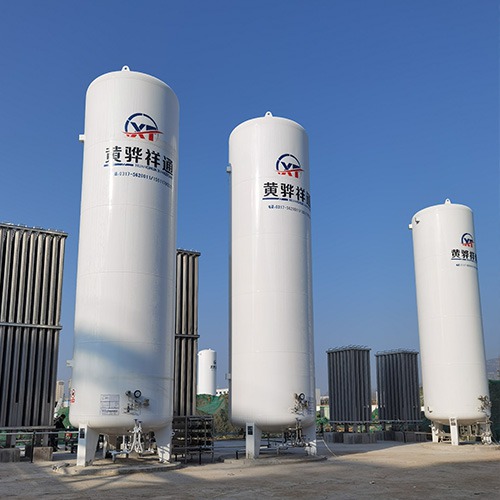
The mechanical design of the storage tank itself falls under the ASME Boiler and Pressure Vessel Code, specifically Section VIII for unfired pressure vessels. This code dictates everything from allowable stress values for different materials at cryogenic temperatures to the minimum thickness calculations for shells, heads, and nozzle reinforcement. For double-wall LNG storage tanks, the inner vessel is designed to the full design pressure while the outer vessel typically serves as a secondary containment barrier designed for a much lower pressure, often just enough to maintain the annular vacuum. Welding procedures must be qualified in accordance with Section IX of the ASME Code, and all pressure-retaining welds require nondestructive examination at specified percentages — full radiography for most critical joints, partial radiography or ultrasonic testing for less critical connections. A manufacturer with A2-level pressure vessel design and manufacturing certification has already demonstrated proficiency in meeting these requirements through third-party audits and periodic facility inspections.
European and International Code Considerations
Projects located outside the United States frequently follow a different set of codes. In Europe, EN 14620 provides the primary framework for the design and manufacture of cryogenic liquefied gas storage tanks, while EN 13445 covers general unfired pressure vessel design. These European standards differ from their American counterparts in several important respects. EN 14620, for instance, includes more prescriptive requirements for concrete outer containment and places greater emphasis on seismic design through Eurocode 8. In the Middle East and parts of Asia, API 620 and API 625 are commonly referenced alongside local regulatory requirements. For manufacturers that supply storage tanks to international markets, maintaining familiarity with multiple code systems is not a luxury — it is a competitive necessity. Many experienced tank factories maintain dedicated code compliance teams that track regulatory updates across different jurisdictions and ensure that design documentation reflects the applicable requirements for each project.
Safety Instrumented Systems and Emergency Shutdown
Modern LNG storage installations rely on safety instrumented systems, or SIS, to detect abnormal conditions and take automatic protective action before hazardous situations develop. A well-designed SIS for an LNG tank typically includes high-pressure and high-level sensors wired to safety-rated logic solvers, which in turn trigger emergency shutdown valves, activate pressure relief pathways, and alert operators. The design of these systems follows IEC 61511, the functional safety standard for the process industry, which requires a formal hazard and operability study to identify the safety instrumented functions needed, along with a safety integrity level assessment for each function. SIL 2 or SIL 3 ratings are common for LNG tank protection functions, which translates into requirements for redundant sensors, voted logic architectures, and rigorous proof testing intervals. Working with a storage tank supplier who understands SIS integration helps avoid the common pitfall of installing a well-built tank but leaving gaps in the protective instrumentation layer.
Inspection, Testing, and Ongoing Compliance
Regulatory compliance does not end when the tank leaves the factory. Most jurisdictions require periodic in-service inspection of LNG storage tanks, typically on a five- or ten-year cycle depending on the local authority having jurisdiction. These inspections involve internal visual examination of the inner vessel shell, thickness measurements at predetermined locations using ultrasonic techniques, and verification that all pressure relief devices are functional and properly sized. In many cases, the original manufacturer provides these inspection services, leveraging their intimate knowledge of the tank design and construction history to identify potential issues that a generic inspector might overlook. Maintaining detailed as-built records, material test reports, and welding procedure qualifications is essential for demonstrating ongoing compliance during these inspections.
Conclusion
Navigating the safety standards and regulatory requirements that govern LNG storage tank design and operation demands both technical depth and practical experience. From NFPA 59A siting requirements to ASME Code mechanical design rules, from European EN standards to functional safety instrumented systems, the compliance landscape is complex and unforgiving of shortcuts. Selecting a storage tank manufacturer with proven expertise across multiple code systems and a track record of successful regulatory inspections provides a solid foundation for any LNG storage project.
References
NFPA 59A: Standard for the Production, Storage, and Handling of Liquefied Natural Gas, 2022 Edition
ASME Boiler and Pressure Vessel Code, Section VIII, Division 1 and 2, 2023 Edition
EN 14620: Design and Manufacture of Site Built, Vertical, Cylindrical, Flat-Bottomed Steel Tanks for the Storage of Refrigerated, Liquefied Gases
IEC 61511: Functional Safety — Safety Instrumented Systems for the Process Industry Sector, 2nd Edition, 2016
API 625: Tank Systems for Refrigerated Liquefied Gas Storage, 3rd Edition, 2020