








Comparing Cryogenic Tank Insulation Technologies
Anyone who has dealt with cryogenic liquids understands the relentless nature of heat leakage. No matter how well you insulate a tank, the ambient environment constantly tries to warm its contents, and every watt of unwanted heat that sneaks in eventually becomes boil-off gas that must be vented, reliquefied, or consumed. The insulation system you select for a cryogenic storage tank has a direct and measurable impact on daily operating costs, product loss rates, and the frequency of maintenance interventions. Understanding the strengths, weaknesses, and sweet spots of the three dominant insulation technologies helps facility engineers make informed decisions that align with their specific operating requirements and budget constraints.
Perlite Vacuum Insulation
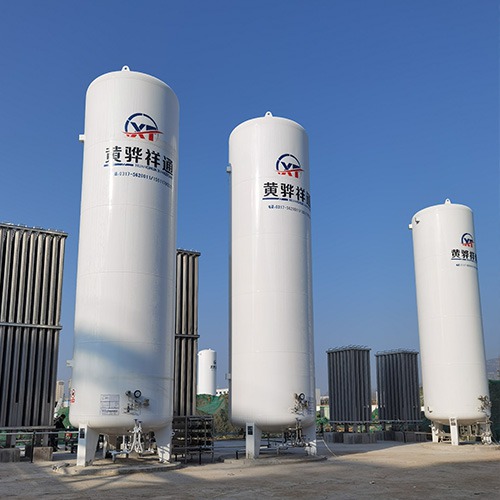
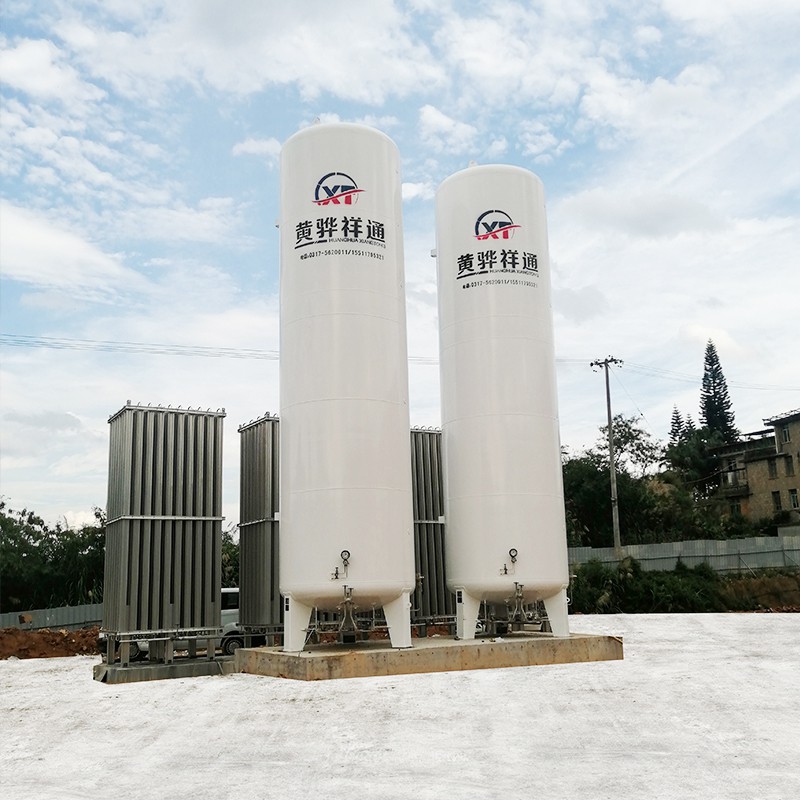
Perlite vacuum insulation has been the workhorse of large cryogenic storage for decades, and for good reason. The system consists of an annular space between the inner and outer vessels that is filled with expanded perlite — a lightweight, granular material derived from volcanic glass — and then evacuated to a relatively modest vacuum level, typically in the range of 1 to 10 pascals. The evacuated perlite eliminates both convective heat transfer through the gas phase and significantly reduces radiative heat transfer because the perlite particles scatter and absorb thermal radiation. The resulting effective thermal conductivity falls between 0.025 and 0.04 watts per meter-kelvin, which is roughly an order of magnitude better than non-evacuated insulation materials. For large stationary tanks in the range of 50 to 250 cubic meters, perlite vacuum insulation offers the best overall value proposition. The raw materials are inexpensive, the installation process is straightforward, and the system is tolerant of minor vacuum degradation over time — even if the vacuum deteriorates somewhat over a twenty-year service life, the perlite still provides meaningful insulation performance.
High-Vacuum Multilayer Insulation
Multilayer insulation, or MLI, represents the highest-performance insulation technology currently available for cryogenic applications. The concept is elegantly simple in principle: stack alternating layers of highly reflective material, typically aluminum-coated polyester or aluminum foil, with low-conductivity spacer material such as fiberglass or silk screen, and house the entire stack within an extremely high vacuum, usually below 0.001 pascals. In practice, however, MLI systems are among the most demanding insulation technologies to design and install correctly. Each square meter of MLI may contain 30 to 80 individual layers, and any compression, gap, or overlap that deviates from the design specification can create localized thermal bridges that dramatically degrade overall performance. When everything is done right, MLI achieves effective thermal conductivities in the range of 0.0001 to 0.0005 watts per meter-kelvin — roughly two orders of magnitude better than perlite vacuum insulation. This makes MLI the technology of choice for aerospace applications, small portable dewars, and specialized transport tanks where weight and boil-off minimization are paramount. The trade-off is cost: MLI systems typically cost three to five times more per unit of tank volume than perlite vacuum systems, and they are significantly more vulnerable to vacuum loss.
Foam Insulation Systems
Polyurethane and polystyrene foam insulation occupies the bottom of the performance ladder but the top of the accessibility ladder. These materials are inexpensive, easy to apply, and require no vacuum maintenance whatsoever, which makes them attractive for applications where boil-off tolerance is generous and capital budgets are tight. Typical foam insulation achieves thermal conductivities of 0.02 to 0.03 watts per meter-kelvin at room temperature, but this value increases significantly at cryogenic temperatures as the foam cells contract and the gas trapped within the cells condenses. For liquid nitrogen and liquid oxygen service, foam insulation alone is generally insufficient for anything but very small quantities or very short-term storage. Where foam does find genuine application is as a secondary insulation layer in combination with vacuum systems — a thin layer of spray-on polyurethane foam applied to the outer surface of the inner vessel provides a barrier against direct contact between the perlite and the cold surface, reducing the tendency of the perlite to compact and settle over time. Some manufacturers also use foam as a supplemental layer on the exterior of vacuum-insulated tanks, providing protection against solar radiation gain and reducing the thermal cycling that the outer vessel experiences.
Performance and Cost Comparison
When engineers compare these three technologies, the conversation inevitably comes down to the boil-off rate per day versus the total installed cost per unit of storage volume. Perlite vacuum insulation delivers boil-off rates of roughly 0.1 to 0.3 percent per day for large LNG tanks, at a total installed insulation cost of approximately 50 to 100 dollars per cubic meter of tank volume. MLI achieves boil-off rates below 0.05 percent per day for comparable applications, but the insulation cost rises to 200 to 500 dollars per cubic meter. Foam insulation, where it can be used, costs perhaps 15 to 30 dollars per cubic meter but permits boil-off rates of 1 percent per day or higher. For most industrial and commercial cryogenic storage applications, perlite vacuum insulation hits the sweet spot in this trade-off, which explains why it dominates the market for stationary storage tanks above 10 cubic meters.
Choosing the Right Technology for Your Application
The selection of insulation technology should not be made in isolation from the broader tank design and operating context. Factors that influence the decision include the specific cryogen being stored and its boiling point, the acceptable daily boil-off rate, the ambient temperature range at the installation site, the available maintenance capability for vacuum systems, and the total project budget. A storage tank manufacturer with experience across all three technologies can provide valuable guidance during the selection process, helping to avoid the common mistake of either over-specifying insulation performance at unnecessary cost or under-specifying it to the point where operating costs erode the initial savings.
Conclusion
Each of the three primary cryogenic insulation technologies — perlite vacuum, multilayer insulation, and foam — occupies a distinct and defensible position in the market. No single technology is universally superior; the right choice depends on the specific requirements of the application. By understanding the performance characteristics, cost implications, and maintenance demands of each option, facility engineers and project owners can make informed decisions that balance upfront investment with long-term operating efficiency.
References
ASHRAE Handbook, Fundamentals, 2021 Edition, Chapter on Cryogenic Insulation
NFPA 59A: Standard for the Production, Storage, and Handling of Liquefied Natural Gas, 2022 Edition
API 625: Tank Systems for Refrigerated Liquefied Gas Storage, 3rd Edition, 2020
Barron, R.F., Cryogenic Heat Transfer, 2nd Edition, CRC Press, 2016
EN 14620: Design and Manufacture of Site Built, Vertical, Cylindrical, Flat-Bottomed Steel Tanks for the Storage of Refrigerated, Liquefied Gases