








Precautions for LNG tank maintenance, valves, and instruments
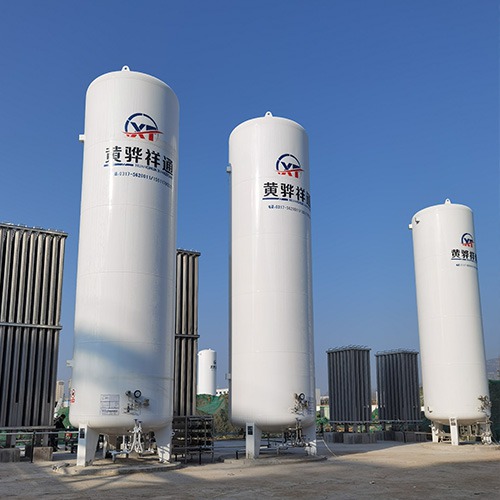
{1} LNG storage tanks are key equipment in gasification stations, and their insulation and sealing properties directly affect the evaporation and leakage rate of LNG storage tanks, that is, the rate of LNG loss and utilization. The performance parameters of storage tanks mainly include vacuum degree, leakage rate, and static evaporation rate. As a low-temperature container, LNG storage tanks meet the relevant technical requirements in national and industry standards. The vacuum sealing degree of a storage tank reflects its vacuum properties, but the vacuum degree decreases over time; The leakage rate of the storage tank affects the vacuum life of the storage tank, that is, the rate of change in the vacuum degree of the storage tank; The static evaporation rate can more intuitively reflect the cooling performance of the storage tank during use. LNG is the abbreviation for Liquefied Natural Gas in English, which stands for liquefied natural growth gas. It is the product of natural growth gas (methane CH4) being purified and cooled to liquefaction at ultra-low temperatures (-162 ℃, one atmosphere). The volume of liquefied natural growth gas is greatly reduced, about 1/600 of the volume of natural growth gas at 0 ℃ and 1 atmosphere, which means that 1 cubic meter of LNG can be gasified to obtain 600 cubic meters of natural growth gas. Colorless and odorless, mainly composed of methane with few other impurities, it is a very clean energy source. The liquid density is about 426kg/m3, and the gas density is about 1.5kg/m3. The explosion rate is 5% -15% (volume%), and the ignition point is about 450 ℃. The natural growth gas generated by oil/gas fields is formed through liquid removal, acid removal, drying, distillation, and low-temperature condensation, reducing its volume to 1/600 of its original size. The uniqueness of LNG storage tanks: Large capacity LNG storage tanks have their own characteristics compared to other petrochemical storage tanks due to their operation at ultra-low temperatures (-162 ℃). At the same time, during operation, due to the boiling state of the stored LNG, when external heat enters, or due to impacts during filling or changes in atmospheric pressure, the stored LNG will continue to vaporize into gas. Therefore, during operation, control of the pressure inside the storage tank, extraction and treatment of the vaporized gas, and refrigeration and cooling should be considered. In addition, accessories such as Anran valves, level gauges, thermometers, and expansion joints for inlet and outlet pipes of LNG storage tanks should also be resistant to low temperatures. The safety device of the storage tank can also start well under low temperature and low pressure. But how to make up for it? How can the effect of supplementary drawing be protected? We need to consider every detail, such as how to seal the vacuum port after replenishing it If any detail is not implemented properly, all previous efforts will be in vain. {2} Valves and instruments for LNG storage tanks: 1. Pressure relief valves. To prevent overpressure accidents in natural growth gas storage tanks and protect the pressure relief of the inner tank, the 20000m ³ low-temperature storage tank is equipped with two pressure relief valves. Pilot operated valves should be used instead of gravity valves for low-temperature storage tanks to avoid leakage when the valve is closed, which can cause valve seat icing and prevent the valve from opening. The valve inlet pipeline is deep below the inner tank ceiling to prevent a large amount of low-temperature gas from entering between the outer tank dome and the inner tank ceiling during pressure release, causing a sharp drop in temperature and resulting in brittle fracture of the outer tank dome. 2. To prevent negative pressure accidents in liquefied natural growth gas storage tanks, the tanks are equipped with a two-stage protection system consisting of a nitrogen filling system and two vacuum valves. When the storage tank experiences low pressure, the protective system valve opens and dry nitrogen gas is replenished into the tank; If the pressure of the storage tank continues to decrease, the vacuum valve will open and supplementary air will enter the storage tank. Supplementing nitrogen can protect the storage tank and prevent the problem of moisture condensation and endangering the tank after humid air enters the tank. The connection of the vacuum valve should be set between the outer tank dome and the inner tank ceiling to prevent the input pipeline from being too long and limiting the flow of gas through the vacuum valve. 3. Due to the low temperature characteristics of LNG storage tanks, a certain number of temperature measurement points are set up on the tank wall, bottom, inner tank, and interlayer between the inner and outer tanks. The temperature measuring points of the inner tank and interlayer are mainly used to measure the temperature between the liquid and the dome of the outer tank and the ceiling of the inner tank, in order to prevent the stratification of low-temperature liquids, which can cause the phenomenon of "rolling" and result in a large amount of gas vaporization, leading to overpressure accidents. The main function of the temperature measuring points on the tank wall and bottom is to use the temperature of the measuring points as a basis during the pre cooling process of the storage tank, to protect the temperature of the inner tank from uniformly decreasing, and to ensure that the temperature difference between the two temperature measuring points does not exceed the design value. 4. To prevent excessive filling of the inner tank, the low-temperature storage tank is equipped with two radar level gauges and one high level switch. When the LNG level exceeds the design level, the inlet pipeline valve of the storage tank will automatically cut off to protect the tank. The 20000m ³ low-temperature storage tank is currently the largest capacity low-temperature liquid storage tank independently designed in China. Its successful equipment marks a new level in the design and manufacturing of large-scale low-temperature liquid storage tanks in China. At the same time, it has accumulated valuable experience for the future design and manufacturing of large capacity low-temperature liquid storage tanks and the localization of large-scale low-temperature liquid storage tanks.