








Vertical vs. Horizontal LNG Storage Tanks: Which Is Better?
In modern energy infrastructure, LNG Storage Tanks are essential for keeping liquefied natural gas stable at cryogenic temperatures. Whether for industrial gasification, peak-shaving stations, or plant-level energy supply, choosing the right tank orientation—vertical or horizontal—has direct consequences for thermal performance, long-term costs, safety, and site planning.
As a specialized manufacturer with established production capabilities, we often help buyers compare these two tank formats. Below is a detailed technical breakdown to support informed decision-making.
1. Structural Characteristics of Vertical and Horizontal LNG Tanks
Vertical LNG Tanks
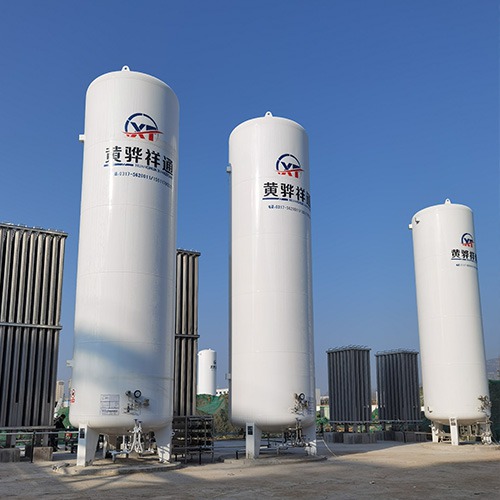
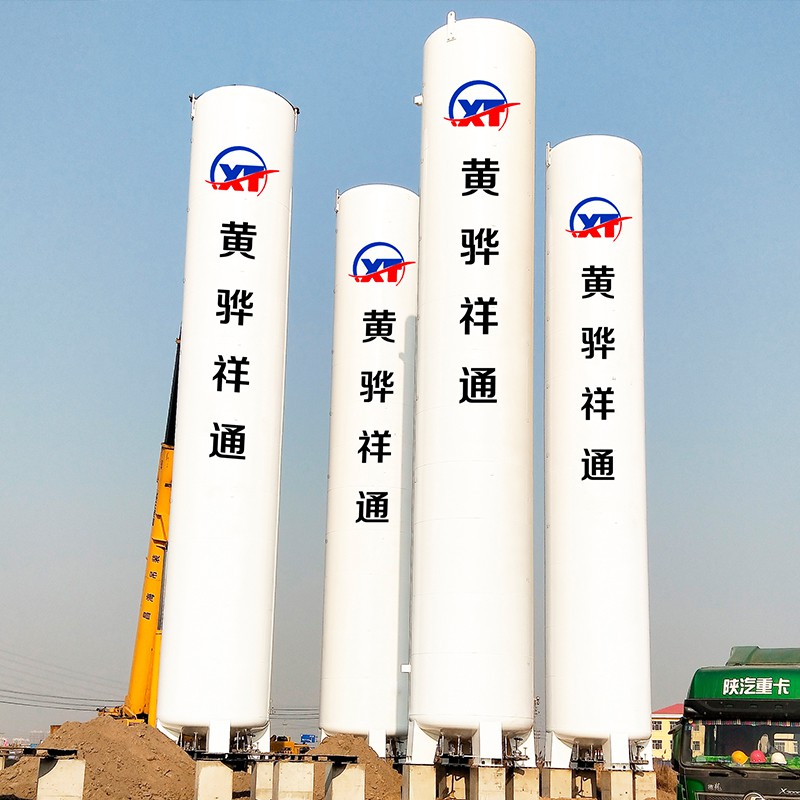
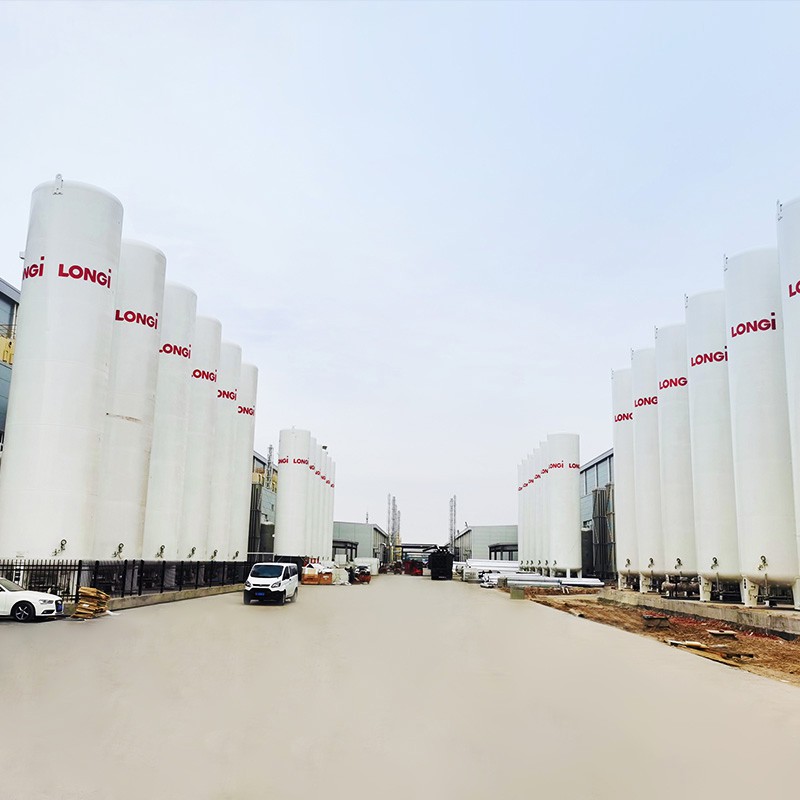
Vertical tanks have a tall cylindrical design positioned upright on a compact foundation. Because their shape channels forces downward, they distribute internal pressure more evenly.
Engineering characteristics:
·Centralized pressure distribution
·Smaller footprint for high-capacity applications
·Stable liquid column improves stratification patterns
Horizontal LNG Tanks
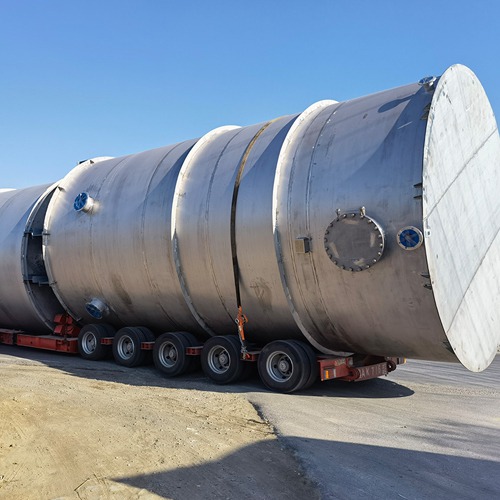
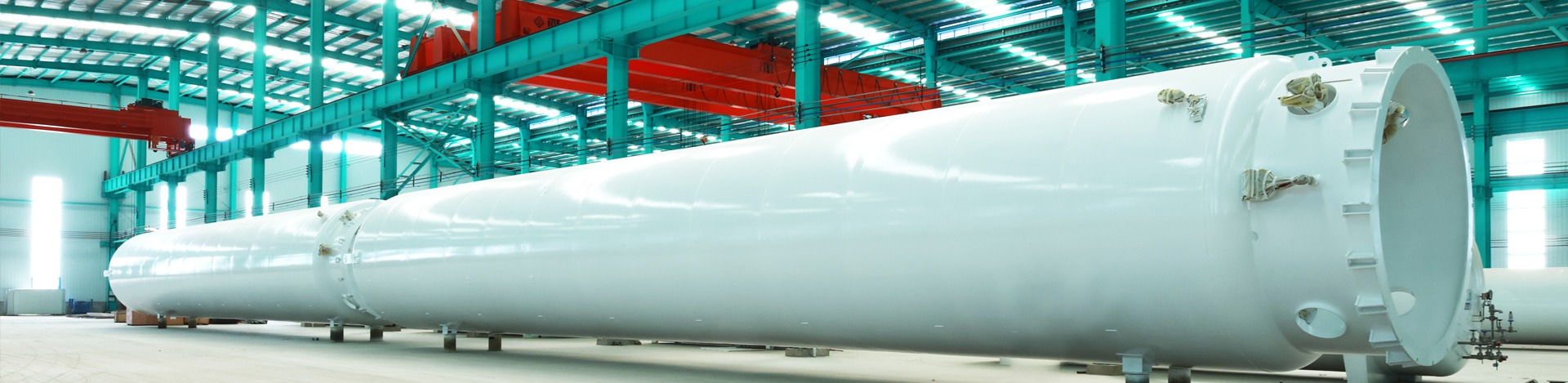
Horizontal tanks lie along their length and rest on saddles or reinforced supports. This orientation spreads weight along the ground, making the structure inherently stable.
Engineering characteristics:
·Lower center of gravity
·Convenient for ground-level integration
·Suitable for mobile, modular, or field-based LNG systems
2. Insulation Behavior & Cryogenic Efficiency
Regardless of orientation, LNG tanks rely on vacuum multilayer insulation to minimize heat transfer. But the tank’s geometry influences temperature stability and boil-off behavior.
Vertical Tanks
Vertical LNG tanks typically achieve superior thermal stability because liquid layers settle more consistently from top to bottom.
Thermal advantages include:
·Reduced heat ingress due to minimized surface-area exposure
·Predictable convection currents
·Better maintenance of stable temperature gradients
These factors make vertical tanks well-suited for large-volume or long-duration LNG storage.
Horizontal Tanks
Horizontal LNG tanks generally have a slightly higher exposure area relative to volume, which can lead to marginally increased heat absorption. Despite this, they perform exceptionally well for mid-scale operations.
Thermal characteristics:
·Conduction paths vary along length
·Minor increase in boil-off potential compared to vertical tanks
·Easy external shielding when necessary
3. Land Use & Installation Requirements
Vertical LNG Tanks
·Excellent for limited land areas
·Best for high storage capacities where vertical stacking reduces footprint
·Often selected for industrial zones with strict land utilization standards
Horizontal LNG Tanks
·Require wider ground space, but foundations are simpler and less expensive
·Convenient for open-site projects
·Easier equipment access for periodic inspection and maintenance
Horizontal tanks are widely used in energy bases, LNG vehicle fueling systems, decentralized gas supply, and industrial consumption points.
4. Safety, Pressure Stability & Operational Reliability
LNG tank safety is influenced by internal pressure behavior, structural rigidity, and liquid level distribution.
Vertical Tanks
·Better vertical pressure balance
·Reduced chance of stratification-induced pressure rise
·Effective for consistent, high-load LNG usage
Horizontal Tanks
·Lower height increases resistance to seismic activity
·Maintenance areas are fully accessible at ground level
·Suitable for operations with frequent filling and withdrawal cycles
Both orientations comply with global cryogenic pressure vessel standards, but they serve different operational demands.
5. Cost, Production Requirements & Long-Term Maintenance
With professional manufacturer support and modern batch production processes, both tank types can be customized for capacity, insulation thickness, and configuration.
Vertical LNG Tanks
·Generally higher upfront construction and foundation cost
·Lower long-term operation cost due to minimal temperature loss
·Ideal for permanent, high-volume storage facilities
Horizontal LNG Tanks
·Lower initial cost
·Reduced installation time
·Favorable for distributed energy systems and secondary LNG supply networks
6. How to Choose the Right LNG Tank Orientation
·Select Vertical LNG Storage Tanks when:
·You need bulk LNG storage
·Space is limited but capacity demand is high
·Thermal efficiency is a top priority
·Long-term stability and low boil-off are required
·Select Horizontal LNG Storage Tanks when:
·You prefer flexible installation and easier maintenance
·Facility area is abundant
·You need fast installation with lower cost
·You operate modular, mobile, or regional LNG systems
Both tank types deliver excellent performance when engineered by a skilled LNG equipment manufacturer capable of reliable, large-scale production.
Conclusion: Which Option Delivers Better Performance Overall?
Choosing between vertical and horizontal LNG Storage Tanks depends on project goals rather than a one-size-fits-all answer. Vertical tanks excel in long-term cryogenic efficiency and compact land use, making them ideal for high-capacity energy applications. Horizontal tanks provide cost efficiency, easier access, and flexible installation suitable for distributed or modular LNG systems.
For any LNG project—small, medium, or industrial scale—the best results come from selecting tanks produced by an experienced manufacturer with strong production quality control, ensuring maximum stability, durability, and cryogenic performance.
References
GB/T 7714:Fan Y, Bochao Z, Yuqi Z. Optimal Design of Cryogenic Insulation System for Large Liquefied Natural Gas (LNG) Storage Tanks Based on Operation Factors[C]//E3S Web of Conferences. EDP Sciences, 2023, 385: 03010.
MLA:Fan, Yang, Zhang Bochao, and Zhang Yuqi. "Optimal Design of Cryogenic Insulation System for Large Liquefied Natural Gas (LNG) Storage Tanks Based on Operation Factors." E3S Web of Conferences. Vol. 385. EDP Sciences, 2023.
APA:Fan, Y., Bochao, Z., & Yuqi, Z. (2023). Optimal Design of Cryogenic Insulation System for Large Liquefied Natural Gas (LNG) Storage Tanks Based on Operation Factors. In E3S Web of Conferences (Vol. 385, p. 03010). EDP Sciences.