








The Role of Pressure Vessels in Cryogenic Storage Systems
The Role of Pressure Vessels in Cryogenic Storage Systems
Pressure Vessels are fundamental components in modern cryogenic storage systems, enabling the safe containment of liquefied gases under low temperatures and controlled pressure conditions. From industrial gas storage to scientific and energy-related applications, these vessels play a vital role in maintaining system stability and operational safety.
As a Pressure Vessels manufacturer with established production capability, ensuring consistent performance across large-scale manufacturing requires a deep understanding of cryogenic behavior, material science, and pressure control. This article explores the role of pressure vessels in cryogenic storage systems and highlights the key design and production factors that influence reliability in bulk supply environments.
1. Understanding Cryogenic Storage Systems
Cryogenic storage systems are designed to store substances at extremely low temperatures, often below −150°C. At these temperatures, gases such as nitrogen, oxygen, or other industrial fluids exist in liquid form, allowing for higher storage density.
However, cryogenic liquids continuously absorb heat from the surrounding environment. This heat ingress causes gradual vaporization, increasing internal pressure. Pressure vessels are therefore essential to safely contain these fluids while managing pressure variations over time.
2. Why Pressure Vessels Are Essential in Cryogenic Applications
2.1 Containment Under Extreme Conditions
Pressure vessels in cryogenic systems must withstand both low temperatures and internal pressure fluctuations. Unlike standard storage tanks, cryogenic pressure vessels are engineered to maintain structural integrity despite thermal contraction and repeated pressure cycles.
2.2 Maintaining System Stability
By providing a controlled environment for cryogenic liquids, pressure vessels help stabilize internal conditions. Stable pressure and temperature reduce boil-off rates and improve overall system efficiency.
3. Structural Design of Cryogenic Pressure Vessels
3.1 Double-Wall Configuration
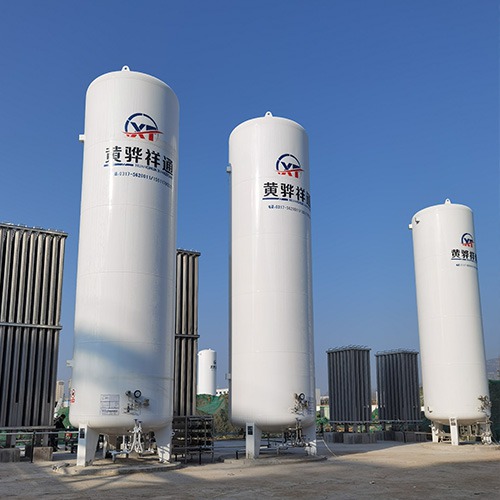
Most cryogenic pressure vessels utilize a double-wall structure. The inner vessel contains the cryogenic liquid, while the outer shell provides mechanical protection and insulation support.
This configuration minimizes heat transfer and protects the inner vessel from external environmental influences.
3.2 Shape and Stress Distribution
Cylindrical and spherical vessel shapes are commonly used because they distribute internal pressure evenly. Proper geometry reduces stress concentration and enhances long-term durability.
4. Material Selection for Cryogenic Pressure Vessels
4.1 Low-Temperature Mechanical Properties
Materials used in pressure vessels must retain toughness and ductility at cryogenic temperatures. Austenitic stainless steels and aluminum alloys are commonly selected for their resistance to brittle fracture under low-temperature conditions.
4.2 Compatibility and Cleanliness
In cryogenic storage systems, material compatibility is critical. Surfaces in contact with cryogenic fluids must be free of contaminants and suitable for long-term exposure without degradation.
5. Pressure Control and Safety Components
5.1 Pressure Relief Systems
Pressure vessels are equipped with safety devices such as pressure relief valves to prevent over-pressurization. These components allow excess vapor to escape in a controlled manner when pressure exceeds safe limits.
5.2 Monitoring and Instrumentation
Pressure gauges, temperature sensors, and level indicators provide continuous feedback on vessel conditions. Accurate monitoring supports proactive maintenance and safer operation.
6. Thermal Insulation and Heat Management
Effective insulation is closely linked to pressure vessel performance. Vacuum insulation and multi-layer insulation systems reduce heat ingress, which in turn stabilizes internal pressure.
By limiting temperature fluctuations, pressure vessels help maintain predictable operating conditions within cryogenic storage systems.
7. Manufacturing Quality and Production Consistency
The reliability of pressure vessels depends heavily on manufacturing precision. Controlled welding procedures, non-destructive testing, and strict dimensional control are essential to ensure vessel integrity.
Manufacturers with standardized production lines can deliver pressure vessels with consistent performance across bulk orders, supporting large-scale cryogenic infrastructure projects.
8. Maintenance and Lifecycle Considerations
Cryogenic pressure vessels are long-term assets. Regular inspection of welds, valves, and insulation systems helps detect early signs of wear or degradation.
Well-maintained pressure vessels contribute to improved safety, reduced downtime, and extended service life in demanding cryogenic environments.
Conclusion: The Critical Role of Pressure Vessels in Cryogenic Storage
Pressure vessels are at the core of safe and efficient cryogenic storage systems. Their ability to contain cryogenic liquids under controlled pressure conditions ensures system stability, safety, and operational efficiency.
For organizations sourcing pressure vessels from a manufacturer with reliable production capacity and bulk supply capability, design expertise and manufacturing quality are key factors in long-term performance. Thoughtfully engineered pressure vessels support the growing demand for safe and scalable cryogenic storage solutions across multiple industries.
References
GB/T 7714:Bergman T L. Fundamentals of heat and mass transfer[M]. John Wiley & Sons, 2011.
MLA:Bergman, Theodore L. Fundamentals of heat and mass transfer. John Wiley & Sons, 2011.
APA:Bergman, T. L. (2011). Fundamentals of heat and mass transfer. John Wiley & Sons.