








The application process and laser non-destructive testing of low-temperature storage tanks
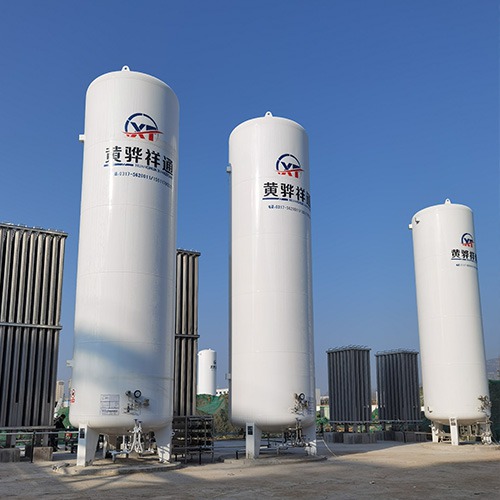
【1】 The use and technology of liquefied gas storage tanks are increasing. More and more enterprises require the use of low-temperature storage tanks. Steel storage tanks are one-on-one equipment for storing various liquids or gas materials. Many enterprises cannot produce normally without energy storage tanks, especially when storing various materials, they cannot do without storage containers of various types and capacities. Most oil storage facilities are above ground storage equipment and are mostly made of metal structures. The use of liquefied gas storage tanks is very extensive, and these tanks are in demand in various enterprises. Oil tanks are storage containers used for oil and gas pipeline transportation. The oil storage tanks used in oil pipeline stations are equipment used to store oil, collect oil, and confirm that the pipeline has a stable oil delivery capacity. The oil storage tanks used in terminal stations are mainly used to receive and store oil, and provide oil to oil using units through the tanks. The vast majority of plastic storage tanks require molding processing technology. During the molding process of the tank, the mold is subjected to appropriately high pressure and widely used compression molding is achieved through extrusion As a storage device, plastic extrusion is used to produce large parts through molding processes, which require significant pressure. The design and production of molding equipment are particularly sturdy, making it difficult to process and increase costs. The anti-corrosion (mainly based on actual reports) liquefied gas storage tanks use rotational molding technology, which requires high strength of the frame. The strength of the frame is sufficient to support materials, molds, and the weight of the frame itself, in order to prevent material leakage. Even for large rotational molding storage tanks or large plastic storage tank components, the production of anti-corrosion (mainly based on actual reports) storage tanks does not require the use of bulky equipment or molds. The processing and production of machine molds are particularly convenient, with low production costs and short cycles. 【2】 The application of laser non-destructive testing technology for LNG storage tanks in the non-destructive testing industry began in the early 1970s. Due to the performance of lasers themselves, their application in the non-destructive testing industry continued to expand, and gradually formed non-destructive testing technologies such as laser holography and laser ultrasound. These technologies have become indisputable new members of the non-destructive testing industry due to their ability in modern non-destructive testing. In recent years, their development has also been relatively fast, and their engineering applications are also quite extensive. The advantages of laser non-destructive testing are that non-contact testing does not require coupling agents, and can detect complex or difficult to access parts. At the same time, remote control excitation and reception can be achieved, thus realizing online detection of liquefied natural growth gas storage tanks. Therefore, laser non-destructive testing can be used for non-destructive evaluation of LNG storage tanks in harsh environments such as high temperature and high pressure. Its limitations include certain requirements for the surface of the object, insensitivity to deep defects, expensive equipment, and high personnel quality requirements.