


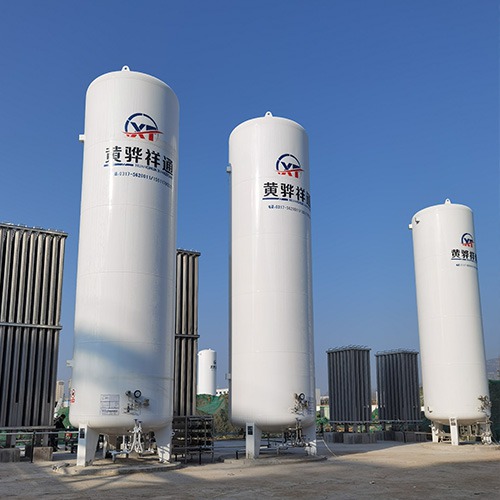
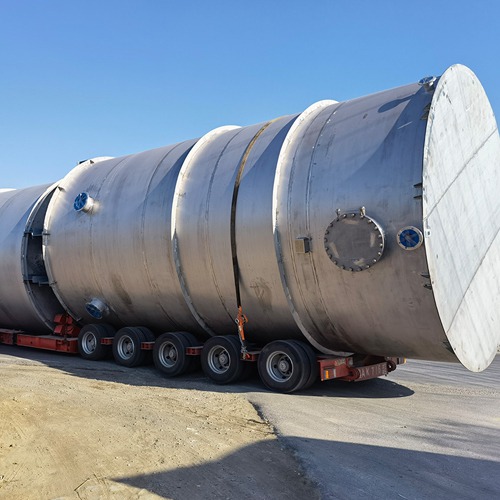





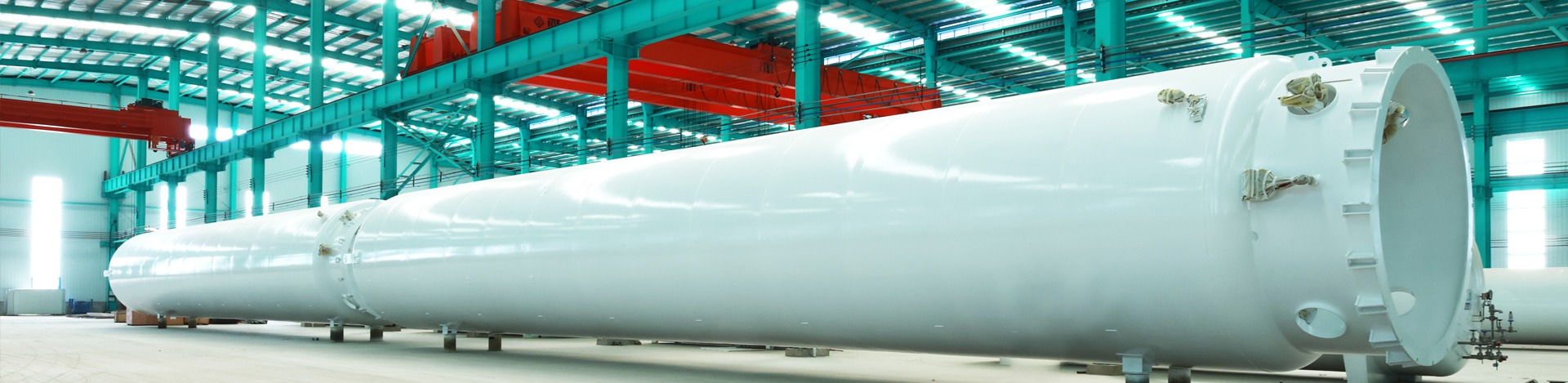

The production, installation, temperature measurement, and control methods of low-temperature storage tanks
【1】 The main process of LNG and the production and installation of storage tank bottoms: 1. The main process of natural growth gas liquefaction: (1) Single refrigerant liquefaction process. This liquefaction process is also known as cascade refrigeration liquefaction process or cascade liquefaction process. Through the name of this process, we can understand that specific refrigerants such as methane, ethylene, or propane are mainly used for its use. In addition, a low-temperature environment is also required, and the processed temperature will reach around minus 30 degrees Celsius, minus 90 degrees Celsius, and minus 150 degrees Celsius. Under the dual action of coolant and ultra-low temperature, the gaseous natural growth gas will cool and transform into liquefied natural growth gas. (2) The expansion refrigeration liquefaction process is a liquefaction process that does not use refrigerants. The characteristic of this process is that the natural growth gas raw material gas is compressed and then throttled to achieve partial liquefaction by reducing the temperature. The specific operation is to first use a compressor to process the gaseous natural growth gas. After processing, the natural growth gas is cooled. After cooling, an expansion machine is used to expand the cooled natural growth gas, thereby deeply liquefying it. Using this process, the operation process is simple and the cost is relatively low, which can be said to be a win-win situation. Liquefied natural growth gas itself has the characteristics of convenient storage and transportation, high performance, and relatively high cleanliness. Moreover, the application of liquefied natural growth gas is also extensive. It is hoped that with the help of a series of corresponding suggestions and measures in this article, more people can understand what liquefied natural growth gas is, as well as its characteristics, production processes, and applications. This will further enhance their understanding and knowledge of liquefied natural growth gas and make a definite contribution to its future application and development. 2、 Before laying the bottom plate of the storage tank, a cross centerline should be drawn on the foundation. According to the layout plan, the middle strip should be laid first, and then the middle and side plates should be laid on both sides. The plates should be aligned while being laid, and temporarily fixed with fixtures or spot welding. The allowable deviation for the overlap width of the bottom plate is ± 5mm; 2. The type and size of the docking joints between the center plates of the tank bottom and between the center plates and the edge plates should meet the requirements of the design drawings. From the overlap section to the docking point, acetylene flame heating should be used for bending, and the misalignment of the docking should not exceed 1mm; 3. The welding sequence of the LNG storage tank bottom plate is important, and welders are strictly required to follow the following process:; 4. The welding of the middle panel should be done with the short seam before welding the long seam; Before short seam welding of batten, the temporary welding spots between the batten and the batten or edge plates on both sides shall be removed; When welding long seams, the welders should be evenly and symmetrically distributed, welding from the center outward using the segmented backward method; 5. Transform the lap joint at the edge of the bottom plate into a butt joint. During welding, it is advisable to symmetrically distribute the gap and skip weld, leaving a uniform shrinkage joint. The gap between the joints should be filled and welded flat, and the surface of the weld seam should be smooth and even; 6. To reduce welding deformation, the circular fillet weld between the bottom plate and the bottom ring plate should be symmetrically distributed by several pairs of welders inside and outside the LNG storage tank, and welded in sections in the same direction. Alternatively, the welding sequence of welding the inner ring first and then the outer ring can be used; 7. The overlapping weld seam of the edge plate should be welded back in sections from the outside to the inside; 8. Then weld the connection seam between the center plate and the edge plate. Before welding, the weld position between the two plates should be cleaned, and the welder should evenly distribute along the circumference and perform skip welding in sections. 【2】 The temperature measurement and control method for LNG storage tanks. Natural growth gas storage tanks are equipped with temperature measurement devices for measuring the temperature of the inner tank (LNG temperature measurement), the inner surface temperature of the steel tank wall, and the bottom temperature of the tank. There are two temperature displays installed for measuring product temperature, which are installed in a static water well that runs through the top and bottom of the tank. Measure the temperature and density of LNG inside the low-temperature storage tank from the top to monitor the potential risk of liquid flooding inside the tank. Flooding can cause the thermal layer to suddenly transfer to the surface of the liquid, accompanied by the generation of a large amount of LNG vapor. This will result in unacceptable overvoltage hazards. To prevent the possibility of liquid flooding, the submersible pump should operate in a bypass mode with a larger flow rate to increase inherent convection and ensure uniform mixing of LNG. The storage tank is equipped with 16 temperature sensors, which are installed in a static water well at different heights. The temperature is displayed on the DCS. The temperatures measured by adjacent sensors are compared with each other on the DCS to identify the formation of any temperature layer (stratification, i.e. a hotter layer beneath a colder layer). In the above situation, an alarm will be triggered because there is a potential risk of flooding. There are 8 temperature sensors attached to the inner tank wall, with different height positions. And there are 12 temperature sensors evenly distributed on different circles at the bottom of the inner tank. In addition, there are four sensors attached at the bottom of the annular space, which are evenly distributed. Install a density measurement device to measure different LNG densities. Under normal circumstances, the storage tank is filled through the bottom pipeline. Only when there is a significant difference in LNG density, choose to fill from the top. The multifunctional shell characteristics of LNG storage tanks include the following: 1. Self explosion suppression or anti explosion. The explosion of LNG storage tanks will bring serious damage consequences. Therefore, regardless of size and thickness, the shell of LNG storage tanks should have the function of self explosion suppression or anti explosion even if severe crack propagation occurs under working pressure conditions. 2. Having sufficient strength and rigidity. LNG storage tanks should meet the requirements of static pressure strength, stiffness, temperature difference stress, fatigue strength, fracture toughness, medium corrosion effect, and safety margin under design conditions, and be statically loaded. The existing reputation suggests that the shell walls of various LNG storage tanks only have these functions. These functions are only the more basic functions of LNG storage tanks. 3. Adapt to other special needs. In addition to the ability to open holes and connect pipes as needed, the shell of LNG storage tank equipment should also be able to provide direct cooling or heating systems on the inner wall, outer wall, and interlayer as needed, as well as other special development needs such as blocking radiation. 4. Continue to maintain the ability to work temporarily. Even if LNG storage tank equipment is suddenly shut down or stopped due to internal medium leakage, it will have serious consequences for large-scale chemical or energy production processes, as well as small vehicle gas storage systems. Therefore, as an LNG storage tank, even in the event of a serious medium leakage, its shell structure should have the function of continuing to maintain a temporary working state, in order to buy time for making more appropriate safety measures. 5. Automatically collect leaked media. LNG storage tank equipment is prone to serious internal medium leakage accidents due to various reasons. To prevent serious consequences such as combustion, explosion, and poisoning caused by leaks, the shell structure of LNG storage tank equipment should also have the function of automatically collecting leaked media and making appropriate safety measures. 6. Change the internal and external construction materials as needed. In addition to the inner wall lining or corrosion-resistant overlay (based on actual reports), as an LNG storage tank, its shell should have the function of flexibly changing the inner and outer layer construction materials as needed, including the reasonable application of aluminum and titanium alloys, to change the shell wall function and reasonable composite bearing capacity, and adapt to various application needs. 7. Minimize welding and overall meticulous mechanical processing as much as possible. The extensive welding work and overall large-scale and meticulous mechanical processing, as well as the requirements for quality inspection and overall heat treatment caused by welding, are the fundamental factors that lead to manufacturing defects and significantly increase manufacturing costs in LNG storage tank equipment. Therefore, reducing welding in the shell wall structure, especially the deep longitudinal and circumferential welds, as well as the characteristics of overall large-scale and meticulous mechanical processing, will bring outstanding effects of doubling manufacturing efficiency and significantly reducing costs to LNG storage tanks. 8. Realize online safety status automatic monitoring with excellent economic performance. There is always a potential risk of sudden fracture and damage to any LNG storage tank due to corrosion, fatigue, and deterioration of toughness. Therefore, as the shell structure of LNG storage tanks, it should have the ability to self suppress explosions and achieve economically excellent online safety status, including the function of timely automatic alarm monitoring of the corrosion status of the inner wall. From a long-term development perspective, this is actually more thorough than taking other Enron technological measures.