


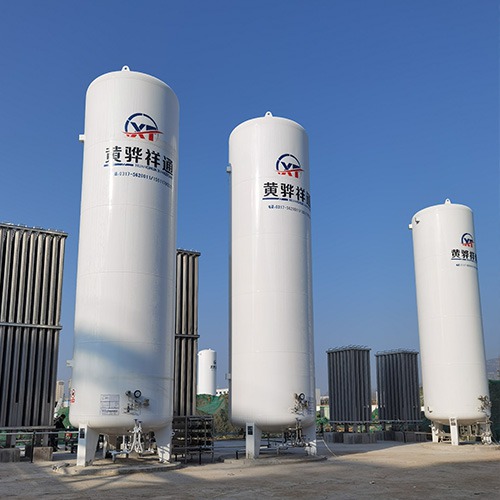
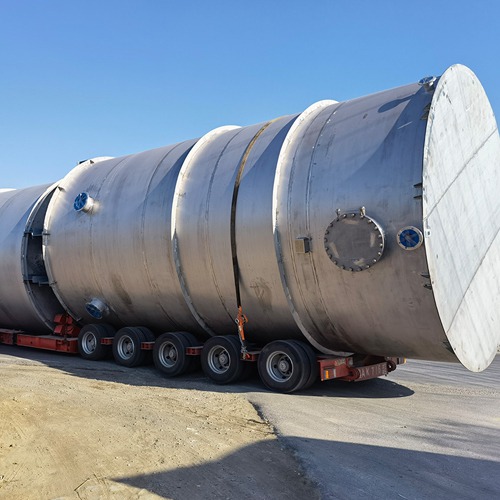





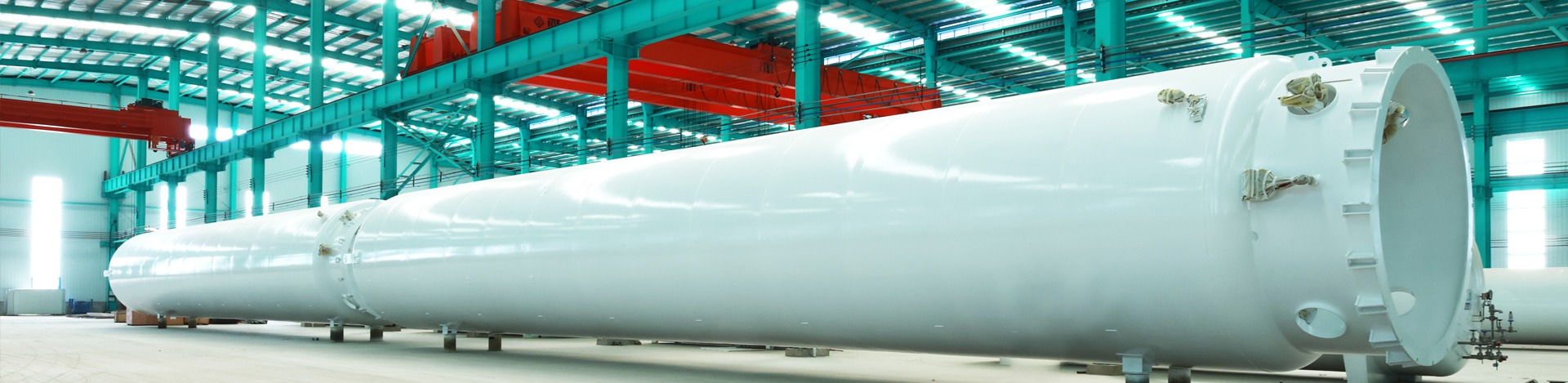

The application prospects of low-temperature storage tank technology meet the requirements of Anran distance
&The application prospects of natural growth gas liquefaction technology. Liquefied natural growth gas, abbreviated as LNG storage tank, is particularly suitable for expanding and peak shaving gas transmission and distribution systems in cities due to its high storage efficiency and flexible transportation properties. Compared with gas storage tanks and cabinets, it has the advantages of easy construction, low investment, less susceptibility to external factors, and suitable speed. LNG can also be used as a vehicle fuel because its octane rating is higher than existing vehicle fuels, it has good blast resistance, and can burn completely with less exhaust pollution, which can improve engine life and reduce operating costs. Comparing compressed natural growth gas with LNG, LNG also has certain advantages, such as high storage efficiency, extended driving range, lower storage cylinder pressure, light weight and small quantity, improvement coefficient, and no restrictions from the gas supply network during station construction. In China, the distribution of natural growth gas resources is different from the distribution of energy consumption levels, and even the opposite. The resources of natural growth gas are mostly concentrated in the west, while the application of natural growth gas is moving towards the southeast. Therefore, it is urgent to solve the problem of natural growth gas transportation. With the development of China's economy and infrastructure, the widespread use of natural growth gas by the people has become popular. However, such a long-distance natural growth gas transmission pipeline, with huge construction investment and technical difficulties caused by geological and geomorphological conditions in some areas, as well as high maintenance costs after completion, are all uncertain factors that can affect the flexible supply of natural growth gas to users in the middle and lower reaches of the Yangtze River. Secondly, as the layout of transmission pipelines is closely related to the vital interests of major gas suppliers, the utilization rate of natural growth gas transmission pipeline capacity in the near and long term should be considered. Therefore, when planning and designing the layout of gas transmission pipelines, it is necessary to predict the scale of natural growth gas consumption in large, medium, and small cities based on the development laws of general cities in the near and long term. However, because these predictions are related to many uncertain factors such as social and economic environment, they become difficult to determine. Therefore, most gas suppliers choose to seek the near rather than the far. This means that the gas pipeline network will only slowly undergo renovation and development in the future as the demand for natural growth gas increases. Thirdly, due to seasonal differences in national gas consumption and occasional malfunctions in gas pipelines, it can cause imbalances in gas supply. Therefore, it is urgent to build a large number of LNG peak shaving plants to play a peak shaving role. It is understood that LNG plants have many advantages over ground high-pressure gas storage tanks and underground gas storage facilities, such as lower investment costs, land conservation, shorter construction periods, and so on. Moreover, the transportation of natural growth gas after liquefaction is economically advantageous, with characteristics such as low risk and strong adaptability in long-distance transportation. In addition, some LNG tankers and ships can transport liquid natural growth gas from remote areas. With the development of the economy, natural growth gas is inevitably favored by urban residents due to its high combustion rate, environmental friendliness, and excellent economic properties. &The safe distance requirement for LNG storage tanks is natural growth gas storage tanks, which are often referred to as natural growth gas storage tanks or liquid nitrogen tanks. Its structure can be divided into two layers, one is the inner layer made of austenitic stainless steel material, and the outer layer is made of insulation material filled with a sandwich layer. After making the product, they are evacuated to a vacuum state. Low temperature tanks are used for low-temperature liquid storage of gases such as liquid oxygen, liquid nitrogen, and carbon dioxide. Generally, one cubic meter of liquid can replace 130 gas cylinders. Low temperature storage tanks can replace the reverse transportation of gas cylinders, which greatly saves a lot of manpower and material resources. The characteristic of low-temperature tanks is that they have a relatively long service life. If a product has a longer service life than similar products, then their operating cost will be many times lower than that of Belgian products. Therefore, choosing to use low-temperature tanks will not be a good choice. Another advantage of other low-temperature tanks is their well structured and compact design, as well as their small footprint for low-temperature storage. They are also easy to control centrally and convenient to operate and use. The low-temperature tank is designed with a concrete tank body and adopts the world's best ethylene closed cycle system. This system can proactively control the temperature and pressure data inside the low-temperature storage tank, and can monitor the pressure and temperature inside the tank in real time. If the temperature and pressure inside the LNG storage tank are too high, this system can actively extract and cool the ethylene inside the tank. Then it achieved low and zero pollution emissions, and also changed the pressure reduction methods of previous incineration and atmospheric emissions.