








The importance of optimizing LNG storage tank design and detecting its leakage situation
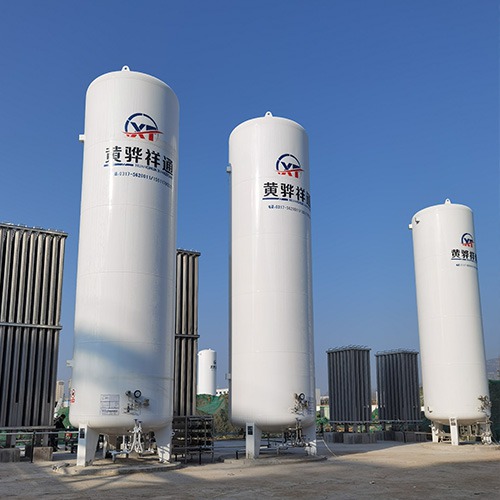
&The importance of optimizing the design of liquefied natural growth gas (LNG) gasification stations. LNG storage tanks are an important energy source for various industries and daily life, and LNG gasification stations are crucial in the transportation of LNG. The main components of an LNG gasification station include a cooling platform, odorization system, metering system, planning system, low-temperature storage tank, and pressurization system. The workflow is summarized as follows: the low-temperature tanker transports LNG to the gasification station, and the tanker is pressurized by the tanker booster. LNG is transported from the tanker platform pipeline to the low-temperature storage tank in the station under the action of pressure difference or LNG submersible pump. After the pressure of the low-temperature storage tank reaches a certain value through the tank booster, the LNG in the tank enters the gasifier through the liquid-phase pipeline. The LNG vaporizes into a gaseous state through the gasifier and is transported to the pressurized gas pipeline in the city through pressure regulation, metering, and odorization. Generally speaking, in the early stages of use of LNG gasification stations, they have many advantages, such as low investment, convenient transportation, and relatively short construction period. Therefore, LNG does not have very high requirements for the external environment, and the start-up and cultivation are relatively slow; The LNG gasification station itself has a small footprint and flexible site selection conditions, so it can be transported on time by tank trucks according to the requirements of the gas supplier, which can meet the customer's demand for natural growth gas in a timely manner; In addition, after gasification and pressure regulation, LNG has a pressure of 0.4 MPa, which does not require pressurization before entering the natural growth gas pipeline network in urban areas, saving costs; In addition, LNG gasification stations can also be jointly built or operated with automobile refueling stations to further improve economic benefits. There are many advantages to LNG gasification stations, but there are also many problems. Optimizing these aspects has great practical significance. The economic benefits of a project are determined by the design quality. If we want to protect the LNG gasification station from supplying gas to users at a reasonable cost, with excellent and applicable processes, we need to optimize its engineering design. According to analysis by Western countries, design costs account for less than 1% of the total cost of construction projects, but their impact on project costs can reach over 75%. Therefore, it can be seen that optimizing the design of LNG gasification stations is important. The factors that have a significant impact on the cost of LNG gasification stations include self-control schemes, equipment selection, fire-fighting facilities, electrical facilities, and overall layout design. The construction period of liquefied natural growth gas gasification stations is short and the supply efficiency is good, which has significant advantages. In order to play a greater role, there are still many hidden dangers, inadequate construction standards, and overall low efficiency problems. Only by solving these problems as soon as possible can the national economic development be worry free. We should optimize the site selection, equipment, processes, etc. of gasification stations according to the specific situation of different cities, strengthen research in all aspects, which has great practical significance for the national economy, energy structure, ecological environment, and people's lives. &The purpose of the liquefied natural growth gas storage tank test is to detect the leakage situation of the tank and whether the results of the leak detection can meet the relevant national standards. The manufacturer of the liquid level gauge for inspection should provide the testing system to users or testing units in the form of computer software that can read and run preset files in the standard testing database. The format of the preset file should comply with the requirements in Appendix A and can be read and run without any preprocessing. The manufacturer should also provide the required initialization time for the tested system. Classification and selection of liquefied gas storage tank files: Select a set of files from the standard testing database, and the application data in the selected files should meet the relevant requirements. These data will be used for the qualification assessment of the inspected system. For each oil delivery method and oil type, the selected file should meet the following conditions: 1. For each oil delivery method listed in the liquefied gas storage tank and each fuel listed in 9.1.5, 25% -75% of the selected data file is taken from the corresponding oil delivery method and fuel tank specifications; 2. The same data file may be used twice or more, for example, multiple refueling machines using a connected storage tank of a submersible pump system; 3. The inspected system should provide quantitative or qualitative output results. The use of stainless steel products is widespread and common in daily life. The materials used are also different depending on the usage method. Stainless steel materials have different types, and the characteristics of different types of stainless steel materials are different. Especially for edible kitchen utensils, stainless steel materials need to be selected for production. Poor quality materials used in stainless steel kitchen utensils can affect the quality of food and people's health. Liquefied gas storage tanks are also a commonly used container. Generally, people use this container to hold water and place it in the kitchen. It is a container with good performance and has many uses. Customers can use it according to their own needs. The materials used in the production of this product are good and can be used with confidence.