








China Cryogenic Tank Manufacturer: What You Need to Know Before Buying
Something Changed in Global Cryogenic Equipment Supply Chains
Walk the floor of a major industrial gas conference today and you will notice something that would have been unusual fifteen years ago: buyers from Germany, Brazil, Saudi Arabia, and Indonesia are standing at booths staffed by Chinese manufacturers, reviewing technical specifications and discussing delivery schedules.
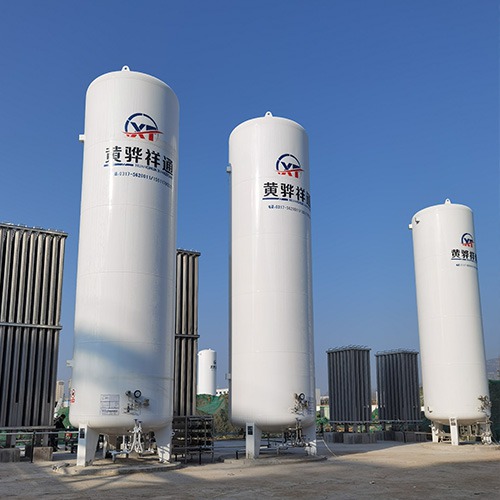
Chinese cryogenic tank manufacturers have expanded dramatically over the past two decades. What began as suppliers of simple, low-specification tanks for domestic use has evolved — for the best companies — into manufacturers capable of producing ASME and PED certified equipment that competes directly with European and American producers on quality, while offering significantly lower prices.
The shift matters for anyone procuring cryogenic storage equipment. Understanding what Chinese manufacturers can offer — and where the risks lie — is now an essential part of procurement strategy.
✓ Advantages of Buying from China
20–40% lower price than European/US equivalents
Large-scale manufacturing capacity; faster production for large orders
Many manufacturers now hold dual ASME + PED certifications
Well-developed industrial supply chain for stainless steel and specialty alloys
Experienced in producing for diverse international markets
Strong English-language sales and technical communication from established exporters
✗ Risks and Challenges
Quality varies significantly between manufacturers
Not all hold valid international certifications — verify independently
Long lead times for some specifications (8–20 weeks)
International shipping and logistics add cost and complexity
Import duties and customs clearance in destination country
After-sales support can be harder to coordinate across time zones
The Certification Question: Can Chinese Tanks Meet International Standards?
This is the first and most important question for any international buyer. The short answer is yes — many Chinese manufacturers can produce tanks to the highest international standards. But "many" is not "all," and the difference matters enormously.
The critical certifications for international buyers are:
| Certification | Required For | How to Verify |
|---|---|---|
| ASME Section VIII Div.1 U-Stamp | USA, most Asian, Middle Eastern, African markets | ASME website certificate registry — search by company name |
| PED 2014/68/EU CE Marking | European Economic Area (EU + Norway, Switzerland, Iceland) | EU NANDO database — search by Notified Body number |
| ADR Certification | Road transport tanks in Europe and signatory countries | Request ADR certificate and verify with issuing authority |
| DOT 49 CFR | Road transport tanks in the United States | Request DOT certificate from manufacturer |
What to Look for in a Chinese Cryogenic Tank Manufacturer
Based on years of observing the industry, here are the markers of a genuinely capable manufacturer versus one that should be approached with caution.
Factory Verification
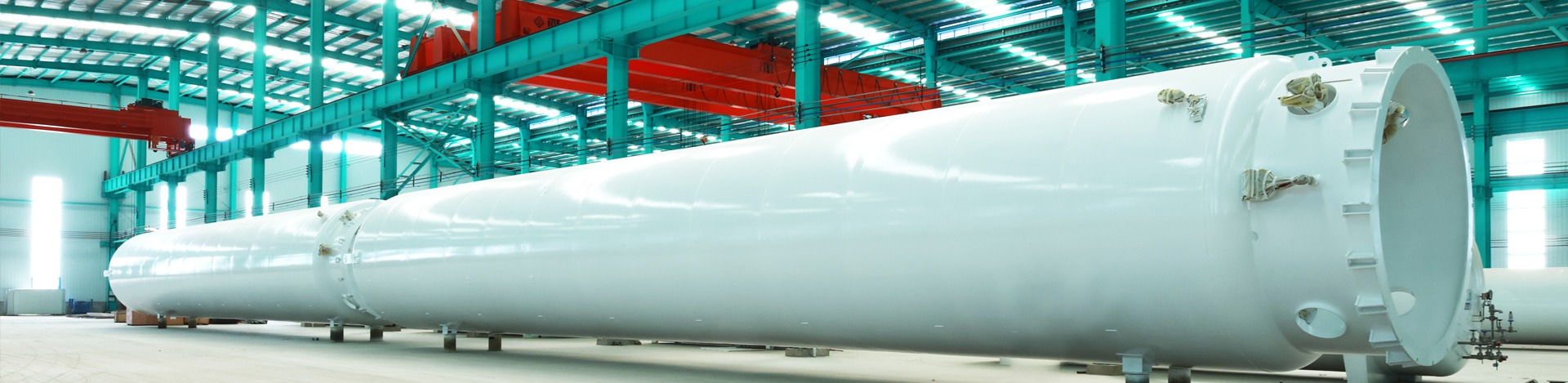
A legitimate manufacturer should be able to show you their workshop — in person during a factory visit, or via live video if you cannot travel. What to look for:
Plate rolling equipment sized for the maximum vessel diameter they claim to produce
Automated welding stations (TIG or SAW) — hand welding alone is insufficient for consistent cryogenic vessel quality
A heat treatment furnace (not just local PWHT) for stress relief of fabricated vessels
In-house non-destructive testing capabilities: UT, RT, PT, MT
A calibrated pressure test facility with appropriate safety systems
An organized quality management office with documented procedures
Quality Documentation
Ask for these documents before placing an order. A reputable manufacturer will have all of them readily available:
Current ASME and/or PED certificates (with valid expiry dates)
Material test reports (MTRs) from the steel mill for each batch of plate
Welding procedure specifications (WPS) and procedure qualification records (PQR)
Welder qualification records (WQR)
Heat treatment records
NDT reports for all radiographed or ultrasonic tested welds
Hydrostatic test records with calibrated pressure gauge calibration certificates
The Factory Visit Checklist
If you can visit the factory — or send a representative — use this checklist to evaluate what you find:
Is the workshop clean and organized? Cryogenic vessel fabrication requires precise, contamination-free work, especially for LOX tanks
Are welding operators using the correct procedures for stainless steel cryogenic vessels? (Auto-TIG preferred; flux-core should be carefully controlled)
Can they show you Charpy impact test results for the materials they use? (Mandatory for cryogenic service)
Do they have a current ASME or PED stamp — and is it registered to their company, not a parent or sister company?
Can they show you export orders from the past two years, ideally to buyers in comparable markets?
Supply Chain Considerations When Buying from China
Beyond the tank itself, international buyers need to account for several logistical and commercial factors:
Shipping and Freight
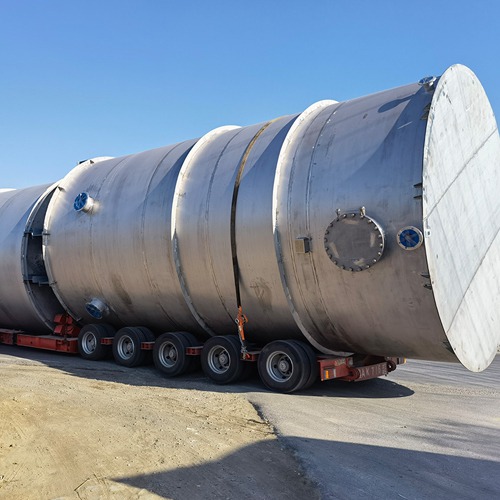
Cryogenic tanks are bulky, heavy cargo. A 20m³ stationary tank might weigh 8–12 tonnes and require a 40-foot container or flat-rack for ocean freight. Transport tanks (on trailers) are typically shipped on ro-ro vessels or as breakbulk cargo. Freight costs vary significantly with fuel prices and shipping lane demand. Always get a landed cost that includes freight, insurance, and port handling before comparing prices.
Import Duties and Customs
Most countries levy import duties on industrial pressure vessels from China. The rate varies by country and product code (cryogenic tanks typically fall under specific HS codes). Your freight forwarder or customs broker can confirm the applicable rate before you order. For European buyers, PED compliance is required for customs clearance, not just for legal operation.
Payment Terms
The most common payment terms for international cryogenic tank orders are 30% deposit, 70% balance before shipment (T/T). Some manufacturers accept letters of credit (L/C) for larger orders, which provides additional protection for the buyer. Be cautious of any supplier requesting 90% payment in advance with no contractual protection.
Frequently Asked Questions
Many produce equipment that meets or exceeds international standards. Reliability varies enormously between manufacturers. Proper due diligence — independent certification verification, factory audits, and third-party inspection — is essential. Some Chinese manufacturers have supplied thousands of tanks to buyers in Europe, North America, and Southeast Asia without incident.
For most export markets: ASME Section VIII Div.1 U-Stamp. For European sales: PED 2014/68/EU CE marking. For transport tanks: ADR or DOT depending on destination. Always verify certificates independently through official registries before placing an order.
Chinese manufacturers typically offer 20–40% lower prices than European or American manufacturers for equivalent specifications. Savings depend on the product, certifications required, and order quantity. Always factor in shipping, import duties, inspection fees, and logistics when comparing prices.
8–16 weeks from order confirmation for standard specifications. Large or complex tanks (above 100m³) may take 16–24 weeks. Rush orders sometimes possible with a 15–25% premium.
Yes. Many Chinese manufacturers hold both ASME U-Stamp and PED CE marking. Verify the specific certificate through official databases before purchasing — the claim must match the actual registered certificate.