








How to Choose a Cryogenic Tank Supplier: A Practical Guide
The Buyer Mistake That Costs the Most
Picture this: you find a supplier offering cryogenic tanks at 35% below the market rate. The emails are professional. The product photos look excellent. You place the order, wait three months, and receive a tank with no valid ASME stamp, a pressure rating that doesn't match the order confirmation, and a fabrication quality that makes you genuinely concerned about pressure testing it at all.
Getting the price wrong on a cryogenic tank is one of the most expensive mistakes in industrial procurement. A failed tank doesn't just mean a wasted purchase — it can mean injuries, facility damage, regulatory violations, and lawsuits.
The good news: this is entirely preventable. A systematic supplier evaluation takes a few hours and can save you from a catastrophic purchase. Here's how to do it properly.
Question 1: Manufacturer or Trader?
The first thing to establish is who you are actually talking to. In the cryogenic equipment market — particularly from Asia — there are three categories of sellers:
True manufacturers: Companies with their own fabrication workshop, welding procedures, quality management system, and ASME/PED certification. They build the tank from raw materials.
Trading companies: Sales agents who source from manufacturers and add a margin. They may provide good service but do not control fabrication quality.
Brokers: Middlemen who connect buyers with manufacturers, take a commission, and often disappear when problems arise.
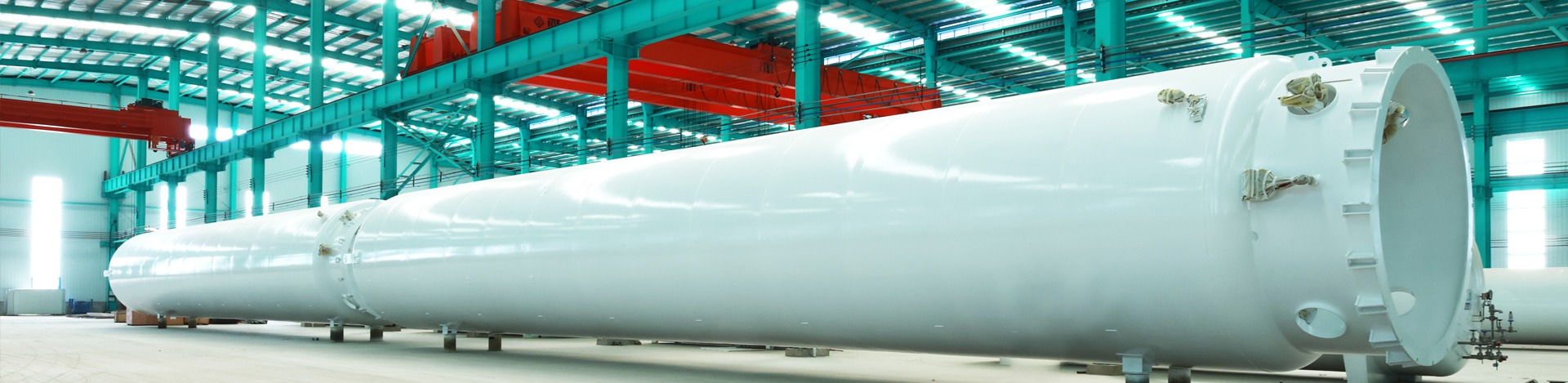
Ask directly: "Do you have your own fabrication workshop?" Then ask for a live video tour. Refusal to show the factory — or deflection to a "partner facility" — is a major red flag.
Question 2: What Certifications Do They Actually Hold?
Certification is not optional and it is not a marketing statement. It is a legal record of who inspected the tank, what standards it was built to, and who is accountable if something goes wrong.
Certification Checklist: Verify Before Buying
Request PDF copies of all certificates. Then verify each one independently — don't rely on the seller's word alone. ASME and PED certificates can be verified online in minutes.
Question 3: What Is Their Production Capability?
Ask specific questions about their workshop:
What is the maximum vessel diameter and length they can fabricate?
Do they have their own non-destructive testing (NDT) capabilities, or do they outsource this?
Do they perform their own heat treatment, or is this done externally?
What is their typical production lead time for the tank type you need?
Can they provide references from buyers in your country?
Question 4: What Does the Quotation Actually Include?
This is where buyers frequently get caught. An apparently competitive quotation may exclude items that represent significant additional cost:
| Item Often Excluded | Typical Cost Impact | What to Ask |
|---|---|---|
| Vaporizer | $3,000 – $15,000 | Is a vaporizer included in the price? |
| Instrumentation (level gauge, pressure gauge) | $500 – $3,000 | What instruments come with the tank? |
| Third-party inspection (for buyer) | $1,500 – $8,000 | Can you arrange inspection by SGS/BV/TUV? |
| Export packaging and documentation | $500 – $3,000 | Is export packaging included? |
| Operation and maintenance manual | Often overlooked | Will I receive a complete O&M manual? |
Question 5: How Do They Handle After-Sales Problems?
A reputable manufacturer stands behind their product. Ask:
What is the warranty period? (Typical: 12–18 months from shipment, or 12 months from commissioning — whichever comes first)
Who do I contact if a PRV fails during commissioning?
Do they have an English-speaking technical support contact for international buyers?
Can they supply spare parts for their tanks (seals, valves, gauges)?
Do they offer remote commissioning support via video call?
The Red Flags List
If any of these appear in your supplier evaluation, proceed with extreme caution or walk away:
Quotation is 30%+ below comparable market rates — if it seems too good to be true, it is
They cannot or will not provide a factory video tour
ASME/PED certificates are "in progress" or "being renewed"
They use free email services (Gmail, Hotmail, Yahoo) instead of a company domain
They refuse third-party inspection during production
They cannot provide at least two references from buyers in comparable markets
They pressure you to sign quickly with "special pricing that ends this week"
Payment terms are 90% T/T in advance with no protection for the buyer
Questions to Ask Before Signing the Purchase Order
Before committing, ask these questions and evaluate the quality of the answers:
Can you provide the name and contact details of three buyers who have operated your tanks for at least two years?
What is your exact production lead time, and what are the payment terms?
Who is your Notified Body for PED certification, and what is their NB number?
What welding procedure specifications (WPS) do you use for stainless steel cryogenic vessels?
Do you perform Charpy impact testing on vessel materials at the design temperature?
What are the exact boil-off rate guarantees for your vacuum-insulated tanks?
Can you provide a sample inspection and test plan (ITP) for my order before I confirm?
Frequently Asked Questions
At minimum, a qualified supplier must hold ASME Section VIII Division 1 certification (U-stamp) for most export markets and PED 2014/68/EU (CE marking) for European sales. Transport tanks require ADR or DOT certification. Always request copies of actual certificates and verify them independently through the issuing organization's registry.
Buying directly from a manufacturer typically saves 10–20% compared to buying through a distributor. Manufacturers can customize specifications, provide direct technical support, and take direct responsibility for warranty. Verify the company is actually a manufacturer before assuming — some trading companies claim factory status.
Request a live video tour of the workshop. Ask for references from buyers in comparable markets. Verify ASME/PED certificates through official registries. Request third-party inspection (SGS, Bureau Veritas, TUV) during fabrication for large orders. A reputable manufacturer welcomes these requests.
Include: gas type (LIN, LOX, LAR, LNG, etc.), capacity in m³, design pressure in MPa/bar, required certifications for your market, installation type, delivery destination, and project timeline. Specificity in the inquiry leads to accurate quotations.
Red flags include: refusal to provide a factory video tour, quotations 30%+ below market rate, inability to provide verifiable certifications, generic email addresses, refusal to allow third-party inspection, and high-pressure sales tactics demanding quick decisions.