








The Role of LNG Tanks in the Clean Energy Transition
The Paradox at the Heart of the Energy Debate
Here is a fact that complicates the simple narratives on both sides of the energy debate: global CO₂ emissions from the power sector fell by approximately 500 million tonnes in the United States between 2007 and 2019. The primary driver was not the growth of wind and solar — though that was significant. It was the displacement of coal by natural gas, made possible by the shale revolution and the dramatic expansion of LNG supply.
Simultaneously, the growth of LNG infrastructure — terminals, storage tanks, and distribution networks — has fundamentally altered the geopolitics of energy, creating new supplier relationships that have arguably done more for energy security in some regions than any renewable energy program to date.
This article examines what LNG storage infrastructure actually does in the context of the energy transition — not as a permanent solution, but as a real, functioning piece of a decarbonizing global energy system.
Why Natural Gas — and LNG — Fits into a Decarbonization Pathway
The Intergovernmental Panel on Climate Change (IPCC) and the International Energy Agency (IEA) consistently identify natural gas as part of the transition pathway — not as an endpoint. The reasons are grounded in physics and energy economics:
| Fuel Comparison | CO₂ per kWh (avg) | SOx | NOx | PM (Particulate) | Ramp-up Speed |
|---|---|---|---|---|---|
| Coal (subcritical) | ~900 g | High | Medium | High | Slow (hours) |
| Coal (ultrasupercritical) | ~750 g | Low | Medium | Low | Slow (hours) |
| Natural Gas (CCGT) | ~400 g | ~0 | Low | ~0 | Fast (minutes) |
| Wind / Solar PV | 0 g | 0 | 0 | 0 | Cannot dispatch |
| Nuclear | 0 g | 0 | 0 | 0 | Very slow (days) |
LNG Tanks and Energy Security: A Geopolitical Dimension
LNG changes the geography of energy. Before LNG became widely available, countries without domestic natural gas or pipeline connections to gas fields had limited options: expensive coal, limited hydro, or diesel generation. LNG allows any country with a coastline — or even an LNG import terminal — to access the global natural gas market.
This has concrete implications. Japan, which has almost no domestic fossil fuel resources, meets roughly 40% of its primary energy needs with imported LNG. South Korea has built its industrialization on a foundation of LNG imports. Countries in Southeast Asia — Vietnam, Thailand, Bangladesh, Pakistan — are building LNG import infrastructure precisely because it offers energy independence alongside economic growth.
For these countries, LNG is not a transitional fuel in the philosophical sense — it is simply the most practical way to access modern energy at scale.
The Renewable Integration Challenge: Why Gas Infrastructure Matters Now
Modern power grids increasingly integrate wind and solar, which are intermittent by nature. A grid that runs 70% on renewables in a windy, sunny period faces a critical challenge when the weather changes: what fills the gap?
LNG storage and regasification infrastructure provides the upstream supply assurance that enables these gas plants to operate reliably. Without sufficient LNG storage capacity, gas plants cannot guarantee they have fuel during sustained high-demand periods.
LNG Storage Technology: From Large Terminals to Industrial Users
LNG Receiving Terminals (Large-Scale)
Large LNG import terminals use full-containment storage tanks with capacities of 100,000–200,000 m³. These tanks are engineered to the highest safety standards — double-walled with reinforced concrete outer shells, full secondary containment, and sophisticated fire detection and suppression systems. The engineering requirements for these structures are extreme: the tank must maintain LNG at -162°C while withstanding earthquakes, hurricanes, and potential impact loads.
Industrial LNG Storage (Mid-Scale)
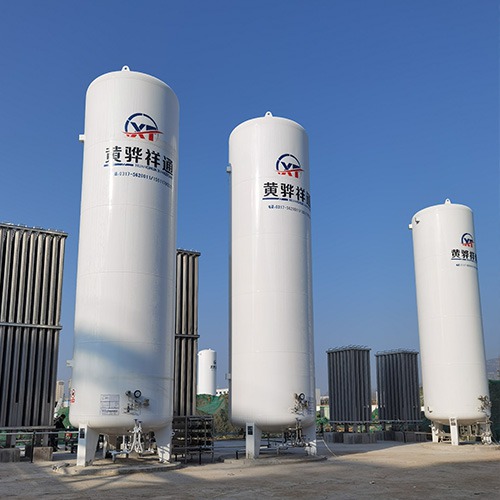
Industrial users — large manufacturing facilities, gas distribution companies, LNG fueling stations — typically use 1,000–20,000 m³ tanks. These are single-wall or double-wall vacuum-insulated tanks, designed for daily throughput and connection to regasification systems. Industrial LNG tanks require careful vaporizer sizing to match peak gas demand.
LNG Truck Transport (Small-Scale)
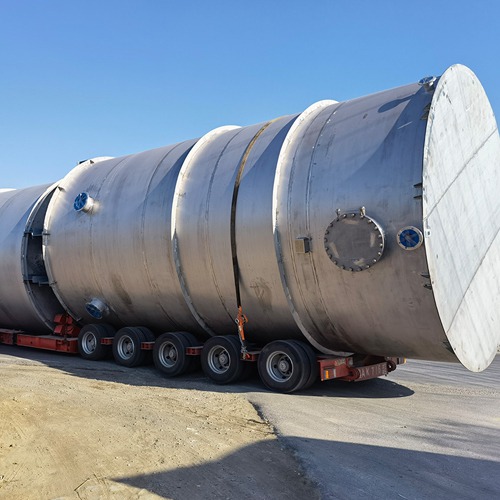
For distributed applications — small industrial users, remote facilities, LNG truck fueling — ISO tank containers and cryogenic road trailers carry 15–50 m³ of LNG. These are ADR or DOT-certified transport tanks with enhanced crash protection and remote shutoff systems.
What Comes After Natural Gas? The Long-Term View
The long-term trajectory is clear: renewable electricity will eventually displace most natural gas combustion. The timeline is not. Projections for when global natural gas demand peaks range from "already peaked in advanced economies" to "growing through 2040 in developing economies."
In this period of continued natural gas demand growth, LNG storage infrastructure is not stranded investment — it will operate for decades. And critically, the same LNG infrastructure can eventually handle green hydrogen (as LH₂) or biomethane (as bio-LNG) without major modifications. This future-proofing is one reason why building LNG capacity now is not incompatible with a long-term decarbonization strategy.
Frequently Asked Questions
LNG is not renewable, but it is the cleanest-burning fossil fuel. Compared to coal, it produces 45–55% less CO₂ per unit of electricity, near-zero SOx, 80–90% less NOx, and virtually no particulate matter. This makes it a significant near-term emissions reduction option — a transitional bridge as renewable energy scales globally.
LNG storage provides energy security through geographic diversification. Countries without domestic gas production can import LNG from multiple supplier nations, eliminating dependence on a single pipeline. The US, Qatar, and Australia are geopolitically distinct from major importers (Japan, South Korea, China), reducing supply concentration risk.
LNG and renewables are complementary. Solar and wind are intermittent — they don't generate when the sun sets or wind stops. LNG plants can ramp up and down quickly (within minutes) to balance grid fluctuations from renewables, providing the dispatchable backup that current purely renewable grids lack. This 'firming' role is a key near-term function of natural gas infrastructure.
Large LNG receiving terminals use tanks of 100,000–200,000 m³ — among the largest cryogenic structures on earth. Industrial users and smaller terminals use 1,000–20,000 m³ tanks. Large terminals use full-containment LNG tanks with double walls and reinforced concrete outer shells for maximum safety.
The lifecycle CO₂ footprint of LNG is slightly higher than pipeline gas due to liquefaction energy and transport. However, this difference (5–15%) is much smaller than the gap between either and coal. The supply diversification and displacement benefits of LNG offset the marginal additional footprint.