


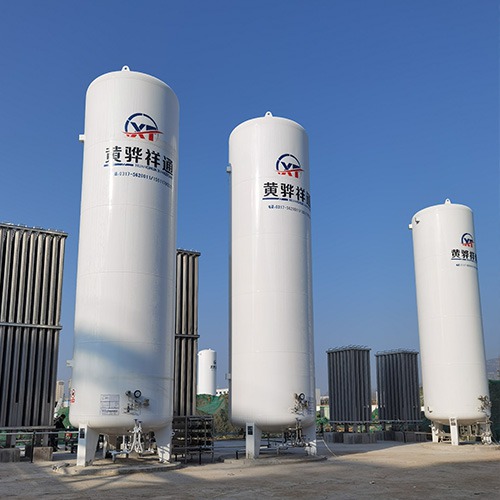
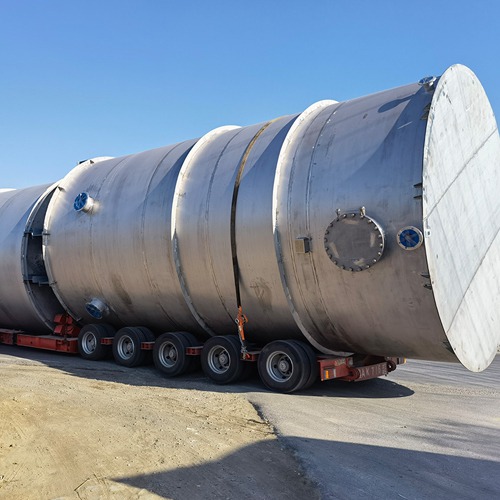





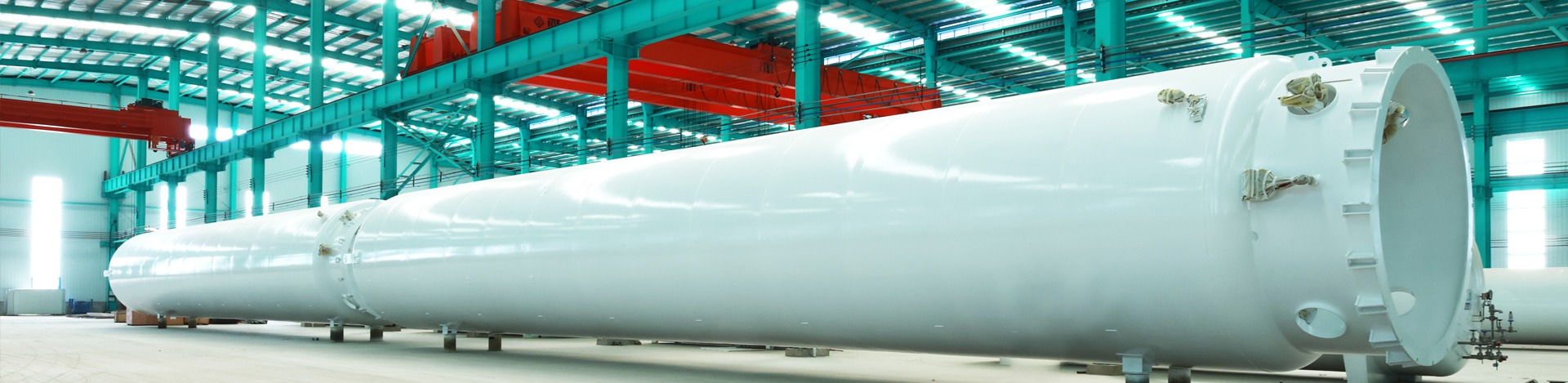

Attention should be paid to the issues and functions of LNG tank spraying
(1) Attention should be paid to the spraying of carbon dioxide storage tanks. Low temperature storage tanks are a type of storage and transportation product that can effectively maintain the product without leakage or other issues, while also providing maintenance during transportation. The following are the issues that should be noted when spraying the product. When painting the storage tank, it is necessary to determine the main surrounding environment. The temperature of the painting construction environment should not be lower than 5 degrees Celsius, and the relative humidity should not exceed 85%; It is prohibited to carry out outdoor construction during rainy, snowy, foggy days and strong winds; If there are crystals on the surface of the coated object, construction is not allowed; During the painting and drying process, the paint film must not be exposed to direct sunlight; The surface temperature of the coated part shall not exceed 60 degrees; Air circulation is required in the construction area, and dust and other foreign objects should be prohibited from flying during painting and dry coating processes. What issues should be noted during the spraying process: 1. Strictly carry out pre-treatment before painting to ensure that the surface of the pressure vessel is free of oil, rust, oxide film, welding spatter, dust and other mechanical impurities. 2. Use grinding method to remove unevenness and scratches on the surface, as well as smooth transition of uneven and uneven welds during welding. It is not allowed to apply putty; 3. Select high-pressure airless spraying equipment or general air spraying tools to spray a primer, and ensure that the sprayed primer does not have defects such as missed spraying, flow marks, wrinkles, uneven surface, etc; 4. After the primer is completely dry, use sandpaper to roughly polish the surface of the primer, and then use P240-P320 water sandpaper to finely polish the surface of the primer until it is smooth and flat; 5. Use a general air sprayer to spray two coats of primer, and ensure that the sprayed primer does not have defects such as missed spraying, flow marks, wrinkles, uneven appearance, etc; 6. After the second layer of primer is completely dry, use a one-on-one inspection instrument to detect the dry film thickness of the sprayed primer. The dry film thickness of the primer should not be less than 30 μ m, and then use a general air sprayer to spray a semi gloss or matte finish. The sprayed paint should not have defects such as missed spraying, sagging, bubbles, cracks, wrinkles, uneven surface, peeling, etc. Otherwise, it should be repaired; The topcoat after spraying should be uniform and sturdy, and a one-on-one inspection instrument can be used to detect the thickness of the coating when needed. (2) Valves and instruments for LNG storage tanks: 1. Pressure relief valves. To prevent overpressure accidents in liquefied natural growth gas storage tanks and protect the pressure relief of the inner tank, the 20000m ³ low-temperature storage tank is equipped with two pressure relief valves. Pilot operated valves should be used instead of gravity valves for low-temperature storage tanks to avoid leakage when the valve is closed, which can cause valve seat icing and prevent the valve from opening. The valve inlet pipeline is deep below the inner tank ceiling to prevent a large amount of low-temperature gas from entering between the outer tank dome and the inner tank ceiling during pressure release, causing a sharp drop in temperature and resulting in brittle fracture of the outer tank dome. 2. To prevent negative pressure accidents in liquefied natural growth gas storage tanks, the tanks are equipped with a two-stage protection system consisting of a nitrogen filling system and two vacuum valves. When the storage tank experiences low pressure, the protective system valve opens and dry nitrogen gas is replenished into the tank; If the pressure of the storage tank continues to decrease, the vacuum valve will open and supplementary air will enter the storage tank. Supplementing nitrogen can protect the storage tank and prevent the problem of moisture condensation and endangering the tank after humid air enters the tank. The connection of the vacuum valve should be set between the outer tank dome and the inner tank ceiling to prevent the input pipeline from being too long and limiting the flow of gas through the vacuum valve. 3. Due to the low temperature characteristics of LNG storage tanks, a certain number of temperature measurement points are set up on the tank wall, bottom, inner tank, and interlayer between the inner and outer tanks. The temperature measuring points of the inner tank and interlayer are mainly used to measure the temperature between the liquid and the dome of the outer tank and the ceiling of the inner tank, in order to prevent the stratification of low-temperature liquids, which can cause the phenomenon of "rolling" and result in a large amount of gas vaporization, leading to overpressure accidents. The main function of the temperature measuring points on the tank wall and bottom is to use the temperature of the measuring points as a basis during the pre cooling process of the storage tank, to protect the temperature of the inner tank from uniformly decreasing, and to ensure that the temperature difference between the two temperature measuring points does not exceed the design value. 4. To prevent excessive filling of the inner tank, the low-temperature storage tank is equipped with two radar level gauges and one high level switch. When the LNG level exceeds the design level, the inlet pipeline valve of the storage tank will automatically cut off to protect the tank. The 20000m ³ low-temperature storage tank is currently the largest capacity low-temperature liquid storage tank independently designed in China. Its successful equipment marks a new level in the design and manufacturing of large-scale low-temperature liquid storage tanks in China. At the same time, it has accumulated valuable experience for the future design and manufacturing of large capacity low-temperature liquid storage tanks and the localization of large-scale low-temperature liquid storage tanks.