


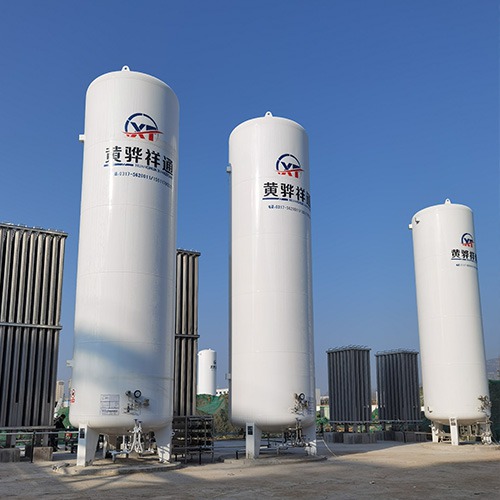
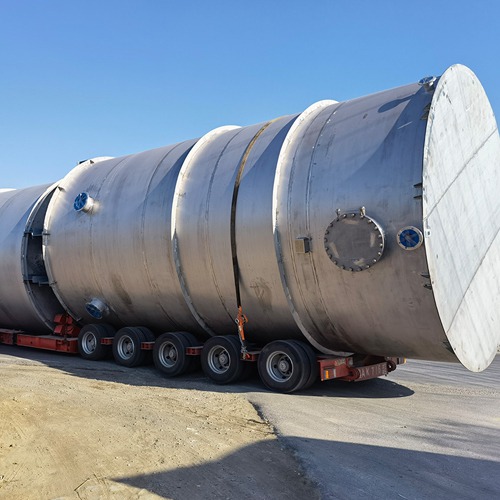






The advantages of low-temperature storage tanks and the preparation work required for filling
One of the advantages of low-temperature storage tanks is that they are lightweight and have good strength. This type of storage tank has a density between 1.5 and 2.0, which is one-quarter to one-fifth of the density of carbon steel, but has similar tensile strength. The tensile strength of this material exceeds that of carbon steel, and its strength can be the same as that of alloy steel. It is needed in various industries, such as the aviation industry, the rocket industry, spacecraft, high-pressure vessels, and in product applications that require weight reduction. This type of storage device has good performance. 2. LNG storage tanks have excellent corrosion resistance (based on actual reports) and are stable materials with good performance. This material has good resistance, and storage equipment using this material can resist corrosion from the atmosphere, water, acid, alkali, salt, as well as various oils and solvents. This type of storage equipment is widely used in various aspects of chemical anti-corrosion (based on actual reports), and is replacing carbon steel storage equipment, non-ferrous metal storage equipment, and low-temperature storage tank equipment. Secondly, what preparations should be made for filling low-temperature storage tanks? 1. Filling is usually the low-temperature liquid filling of the contents of a liquefied natural growth gas storage tank at room temperature (including a low-temperature storage tank that has been storing low-temperature liquid for a period of time and has been reactivated). Before filling, the liquid level gauge and pressure gauge should be checked and calibrated, and various valves should be checked for correct opening and closing status, as well as whether the pipeline is unobstructed; Open the pressure gauge valve and follow the liquid level gauge operation procedure to make the liquid level gauge in working condition. When the low-temperature storage tank is used for high-purity low-temperature liquids, it should be purged and replaced. The method is to use dry oil-free air or nitrogen at 70 ° C~80 ° C, heat and blow off the inner container, the blowing time should not be less than 8 hours, and then replace it with product gas; For nitrogen gas that is lighter than air, it should be introduced from the vent valve V-12 and discharged from the bottom liquid inlet and outlet valve V-1. For oxygen or argon gas that is heavier than air, it should be introduced from the bottom liquid inlet and outlet valve V-1 and discharged from the vent valve V-12. When the pressure of the low-temperature storage tank reaches 0.1-0.2 MPa, the replaced gas should be discharged. This process should be repeated several times, and the purity of the discharged gas should be tested before stopping the replacement; All valves and pipelines should also be blown off with product gas to meet purity requirements; After replacement, seal under positive pressure to prevent external air from being inhaled. 4. Fill and store general low-temperature liquids without the need for the above-mentioned blowing and replacement treatment. 5 filling, it is recommended to use normal pressure filling, that is, open the vent valve V-12 of the inner container before filling, and only close it after the full therapy filling is completed. During the filling process, the inner container is at normal pressure or low pressure, making it easy to operate; For filling uncommon or precious low-temperature liquids, the inner cylinder of the low-temperature storage tank can be cooled with liquid nitrogen first, and then replaced with low-temperature product gas to the specified purity before filling the low-temperature liquid. Pressure filling can be used during filling.