


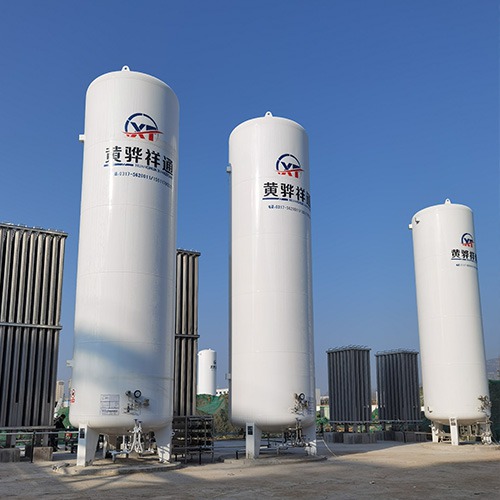
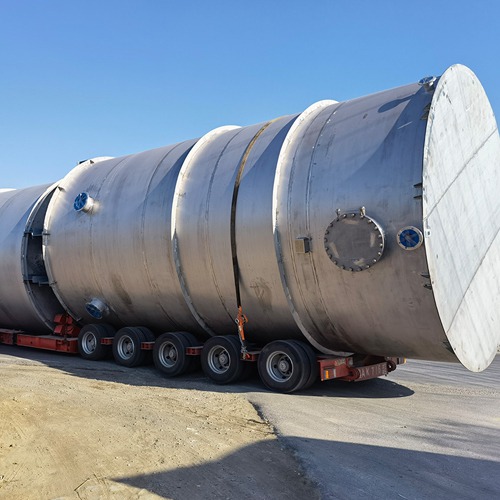





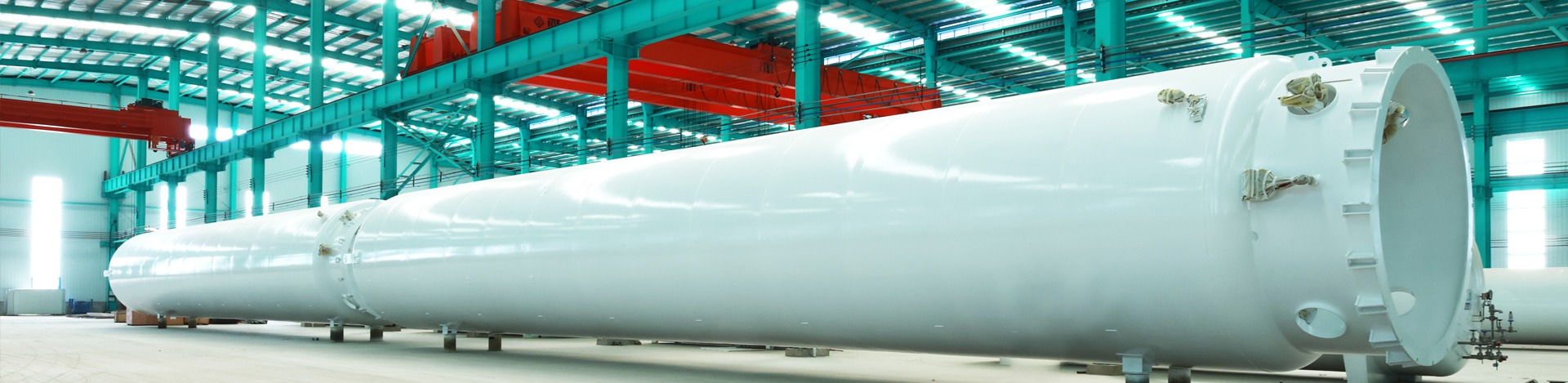

Preliminary selection and low installation process characteristics of low-temperature storage tanks
1、 Preliminary selection of LNG tank valves: After the LNG tank inspection is qualified, check whether the valve works normally, that is, whether the valve discharge capacity can meet the large discharge capacity of low-temperature natural growth gas storage tanks. Correctly selecting valves is a necessary condition for protecting the operation of pressure vessels. Valves are selected based on the process conditions of the container. Therefore, when selecting valves, not only should the working pressure and temperature of the pressure vessel be considered, but also the selection should be based on the characteristics of the medium. Natural growth gas storage tanks are elliptical head horizontal vessels, belonging to Class III pressure vessels. Due to the flammable and explosive nature of the liquefied petroleum gas it contains, the pressure fluctuates greatly with temperature changes, making it prone to overpressure and overload operation, resulting in serious accidents such as container rupture, fire, and explosion. So, based on the experience of stable operation of low-temperature natural growth gas storage tanks for 20 years, in addition to meticulous operation and strict management, it is also important to choose the correct accessories. There are many types of LNG low-temperature storage tank valves, including spring valves, lever valves, and impulse valves. The valve for low-temperature natural growth gas storage tanks should be of the externally mounted spring type. Spring valves are divided into two types: micro opening and full opening. Micro opening and full opening refer to the opening height of the valve disc. Spring type valves are divided into closed and non closed types. As liquefied petroleum gas is a flammable and explosive substance, it is not allowed to leak into the air. The valve is the second barrier for the operation of low-temperature natural growth gas storage tanks. In addition to selecting suitable valves according to the valve calculation method, the valve is also calibrated once a year to confirm that the discharge pressure of the valve meets the operating pressure of the low-temperature natural growth gas storage tank. 2、 The installation process characteristics of low-temperature storage tanks are as follows: the tank wall is constructed using the inverted method, and the tank top is constructed using the gas lift method. 1. Construction characteristics of low-temperature storage tank roof: 1. Prefabrication: The outer tank roof of the low-temperature storage tank is installed and welded on a temporary support platform. The best way is to set up the support platform, then assemble and weld the steel structure of the tank roof, and finally assemble and weld the tank top plate. The lifting of the outer tank roof of the liquefied natural growth gas storage tank is carried out by a 150 ton crawler crane. The steel structure of the tank roof should be constructed after the temporary support platform for the tank roof is erected. The center ring of the tank top steel structure should be prefabricated and inspected on the ground. After confirmation of qualification, it should be installed on the center column, and the installation positions of each steel structure skeleton should be marked on the center ring. In order to enhance the stability of the scaffolding, two cranes should be used for symmetrical installation of steel structures in groups. Positioning lines should be drawn on the concrete wall to control the installation position of the steel structure on the top of the tank. When installing the connecting ring beams of each group of steel structure sub bones, there is no need for positioning plates, and the gap can be directly installed on the main and sub bones. The welding of steel structures should adopt the method of spaced welding. Install sub bones between the welded steel structures, and use positioning plates with a gap of 1-2mm to connect the ring beams between the steel structures. The welding of the steel structures still adopts the method of interval welding. The ceiling panel can be installed and welded on the secondary base plate. Install temporary scaffolding on the bottom of the secondary tank for the installation of suspended ceilings. Transport the prefabricated ceiling panels into the tank and install them from the center to the surrounding direction according to the position in the construction drawing. During installation, attention should be paid to the direction of the holes in the ring plate and partition plate. After the welding of the ceiling panel and its ring plate, partition plate, and reinforcement ring is completed, the suspension rod can be used to connect the ceiling panel to the suspension bracket of the outer tank top as a whole. 1.2. The gas lift operation of lifting the dome of low-temperature storage tanks is a very important task in tank construction. Moreover, the materials used in the air lift operation are very large, so it is necessary to prepare prefabrication work in advance, such as steel wire rope brackets and pulleys, guide pulley brackets, temporary inner tank sealing plates, temporary construction ports, air ducts, and sealing tape, etc. Many accessories need to be installed in the ceiling before the air lift. Technicians need to carefully refer to the drawings and complete the prefabrication and installation of these accessories before the air lift. On the basis of the trial ascent, after confirming that there are no obstacles to the official ascent, the official ascent can begin. The official ascent should be carried out under good weather conditions. After the final inspection, all relevant personnel are located at the designated positions. Then start to open the 1 # blower and start to increase the pressure. When the pressure in the tank reaches the rising pressure, adjust the air valve of the blower to reach the rising speed (30mm/min). When the sealing belt passes through the air duct of the 2 # blower, start the 2 # blower. In addition, adjust the output air valve of the 1 # blower to reach the speed of 50mm/min. When it passes through the double door, increase the rising speed to 100mm/min, and when it passes through the temporary construction port, increase the speed to (150-200) mm/min. When the top of the low-temperature storage tank starts to rise, the inspectors inside the tank should carefully check whether there are any obstacles during the rise of the tank top, and carefully confirm the levelness and balance of the tank top during the rise process. We also need to confirm the pressure and rising speed inside the tank. The blower team should regularly monitor the operation status of the blower (current, air door size, etc.). The measurement team should report the rising position of the tank top at any time. When the tank top is about to reach the upper temporary wall panel, slowly reduce the lifting speed of the tank top and check whether the installation position of the tank top and pressure ring (the connecting component between the outer tank wall and the tank top) is correct. If it is misaligned, lever type adjustment wedges, jacks, etc. can be used to adjust the position. After adjustment, the top of the tank can be overlapped with the pressure ring, and then fixed and welded. 2. Construction characteristics of inner tank bottom 2.1. Bottom plate laying: The inner tank bottom plate should be laid after the insulation of the ring beam between the inner and outer tank bottoms is completed. Therefore, the outer tank top has been installed and welded, and the inner tank bottom plate can only be transported from the temporary construction port. Therefore, a transport plate slide should be set up at the construction port to transport the bottom plate into the tank. The transportation of the bottom plate inside the tank is carried out by a self-made transport plate truck. During transportation, due to the insulation glass bricks and dry sand already laid on the bottom of the tank, temporary boards were laid under the feet of the operators and under the wheels to prevent damage to the sand surface and crushing of the insulation glass bricks. If there is minor damage to the level of the sand surface, it must be immediately restored before construction can continue. 2.2. Edge Plate Installation: The edge plates of low-temperature storage tanks are welded together, so they should be assembled on a platform set up by a tripod for X-ray inspection. The key points of installation are the control and adjustment of geometric dimensions. Considering the lateral shrinkage deformation of each weld seam of the edge plate and the longitudinal shrinkage deformation of the fillet weld seam, in order to protect the geometric dimensions of the tank body, the installation radius of the edge plate should be appropriately enlarged during assembly. Draw the installation position line of the edge plate on the ring beam according to the enlarged size. The base plate can be laid first, or the base plate can be pointed onto the edge plate. Install the edge plate clockwise according to the position line, leaving an adjustment plate. During installation, pay attention to the gap between the groove and the outer small gap and the inner large gap. After assembling the edge plate, perform spot welding with a length of 80 mm/300 mm. Clean the groove and preheat it according to regulations during spot welding. At the same time, install the weld lead out plate and the anti deformation fixing fixture. The anti deformation fixture, eye block, and bottom plate are firmly welded together, with a spacing of 200 millimeters between the fixtures. The groove of the lead out block is the same as that of the edge plate. The edge plate is installed in one week, the fixtures are firmly fixed, the groove is cleaned, preheated according to regulations, and welded by multiple welders. Each welder has one or several welds, and the welders evenly distribute them around the circumference while welding symmetrically. The welding direction is from the inside out, and the final weld is welded to the lead out plate. The weld position is 300mm long from the outer side to the inner side of the edge plate. First, weld a 300mm base weld. After passing the PT inspection, complete the 300mm long weld seam. After passing the radiographic inspection within 300mm of the outer end of each weld seam as required, the wall panel can be installed. The remaining welds will be welded after the installation and welding of the third or fourth section of the plate, and the large angle welds will be welded before welding. During welding, the welded welds will be polished with a grinding wheel, and the end will form a sloping groove for future joints. After completing the welding of the vertical part 300mm of the tank wall plate installation on the edge plate and confirming its qualification, lift the edge plate in a clockwise direction one by one, remove the bottom temporary support platform, and let the edge plate fall onto the ring beam. Then measure the outer diameter of the edge plate to see if it is a perfect circle. If it is not a perfect circle, it should be lifted and lowered again. After the 300mm weld seam is welded, the original fixture for installation is not allowed to be removed until all welds on the edge plate are welded. 3. Characteristics of tank wall construction: The tank wall construction is a formal installation method, and the installation method is the same as that of previous low-temperature storage tank construction, except that a construction opening needs to be reserved on a section of the wall panel, which is not installed during assembly. 3.1 Reserved wall for construction opening: When assembling a section of wall panel, mark the accurate position on the bottom plate. When assembling the wall panel, follow normal construction, except that the wall panel at the construction opening is only fixed with fixtures and not welded. After the assembly and welding of the inner wall panels in the second and third sections are completed, disassembly can be carried out. Within 300mm on both sides of the 1H and corner weld construction ports, no welding is allowed. Reinforcement materials should be installed in three directions around the construction port, and attention should be paid to leaving no gaps between the horizontal reinforcement materials and the vertical reinforcement materials. There should be no gaps between the vertical reinforcement materials and the side panels. The reinforcement materials and the outer side panels should be pulled together with gantry plates and diagonal wedges, and the side panels and reinforcement materials should be welded. The construction entrance and exit should be lifted with a temporary crane, and the docking fixtures should be removed. The construction port should be folded off, and the scaffolding of the inner and outer slots can be temporarily removed because they are moved out from between the inner and outer slots. 3.2 Assembly of construction port: The assembly of the low-temperature storage tank outer tank construction port confirms that the construction inside the tank has been completed, all accessories have been installed, and the inner and outer tank construction port plates have been transported to the tank. Unnecessary equipment should be removed. At this time, the pouring construction of the concrete wall construction port can be carried out. After the pouring of the concrete wall construction port is completed, the assembly of the outer tank construction port can begin. Use a temporary crane to lift the construction site, pull it in from the inner wall construction site, attach the construction site wall panel tightly to the concrete wall, assemble it to the installation position, and complete the welding. The assembly of the inner wall construction port requires measuring various dimensions, processing the construction port plate along these dimensions, lifting the construction port with a temporary crane, and implementing docking due to the deformation and shrinkage of the inner wall construction port. After the assembly is completed, welding shall be carried out in the order of vertical seam -1H - large corner seam. After passing the inspection, the scaffolding and other construction equipment shall be moved out to complete the installation of the construction site.