


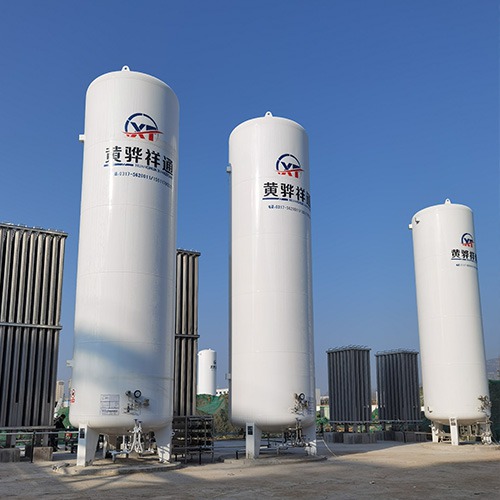
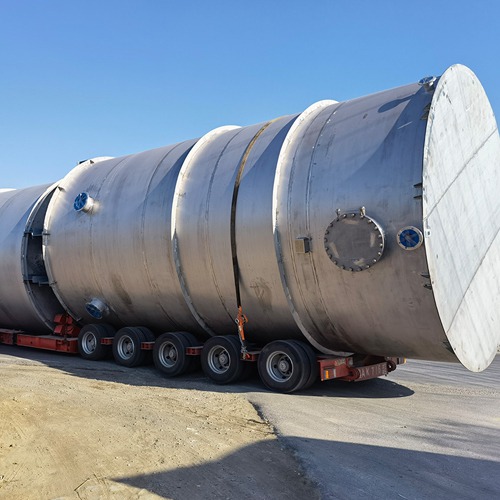





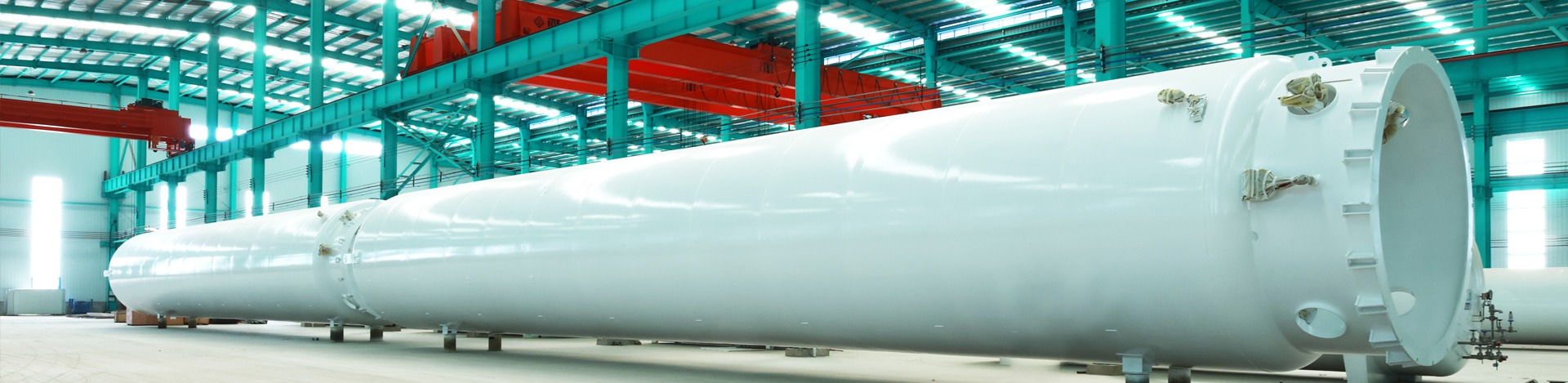

Cold insulation techniques and inner tank design for low-temperature storage tanks
(1) The purpose of LNG tank insulation design is to meet the requirements of process production, maintain and maximize production capacity, reduce cold loss, save energy, prevent condensation on the outer wall surface of the tank, and change the working environment. The cold insulation structure of low-temperature storage tanks should first consider the cold insulation and thermal insulation properties for storing low-temperature liquids. Different structures and insulation materials should be used according to different storage conditions. For the insulation design of the top of the storage tank, as the insulation material covers the inner tank ceiling, it does not need to bear the pressure of equipment and evaporated gas (only the weight of the insulation material itself). The insulation material should have the characteristics of low thermal conductivity and low density. The upper part of the top of the low-temperature natural growth gas storage tank is made of glass wool, with a cold insulation thickness of 500mm. It is laid and installed in 5 layers, with aluminum foil on the outer side of the upper layer of glass wool to prevent expanded perlite or other impurities from entering the inner tank through gaps. Expanded perlite is chosen as the insulation material for the inner and outer wall interlayers, while expanded perlite is used for the side wall insulation. After cooling the storage tank filled with low-temperature liquid, the contraction of the inner tank will result in insufficient expanded perlite filling in the upper and edge areas of the tank's side walls, and the low-temperature storage tank cannot be filled with expanded perlite again after pre cooling. To prevent the entry of humid air, a layer of elastic insulation glass fiber felt is added to the outer wall of the storage tank to avoid secondary filling of perlite and reduce the pressure of perlite on the inner tank wall. The design of cold insulation materials and structures at the bottom of liquefied natural growth gas storage tanks should not only protect and minimize the tank's cold loss, but also ensure that the compressive strength of the insulation materials can withstand the total weight and gas-phase pressure of the inner tank and low-temperature liquid. In the design and construction of a 20000m ³ low-temperature storage tank, the bottom insulation structure is divided into two parts: a pressure bearing ring and a central ring, and different insulation materials are used based on the different pressures borne by various parts of the tank bottom and the principle of minimizing cold loss rate. The pressure bearing ring is the main component that bears the weight of the inner tank, and its strength requirements are relatively high. Therefore, a composite structure of concrete and glass bricks is used as the cold insulation material for the pressure bearing ring. For the bottom center part, using glass bricks alone can meet its strength and cold insulation design requirements. (2) The standard for the design of liquefied natural growth gas storage tanks is Appendix Q of API620. The inner tank is the core and design of the entire low-temperature storage tank. 1、 The height of the inner cylinder of the liquefied natural growth gas storage tank in static design should consider meeting the design volume (design liquid level) of the tank, as well as the height occupied by a portion of the liquid LNG remaining in the inner tank due to the height of the pump suction port, and the top free space reserved for liquid level shaking caused by earthquakes. The thickness of the stainless steel inner tank wall plate design should meet the following requirements: (1) the liquid column pressure equivalent to the design liquid level of liquid LNG; (2) The hydraulic test pressure is 1.25 times the liquid column pressure equivalent to the design liquid level of liquid LNG. Due to the open structure of the inner tank, the gas phase pressure on both sides of the inner tank is equal, so there is no need to consider the evaporation gas pressure in the calculation of the inner tank wall thickness. 2、 The larger longitudinal compression force at the bottom of the cylinder can be calculated according to Appendix L5.2 of API620, and the result needs to meet the requirements of Appendix L5.3 of API620 for larger longitudinal compression stress of the cylinder. 3、 The seismic design of natural growth gas storage tanks adopts pre embedded anchor bands to resist the overturning moment caused by earthquakes. The welding of the inner tank anchoring band and the inner tank wall panel should be carried out during the hydrostatic test, while the welding of the outer tank anchoring band and the outer tank wall panel should be completed during the pneumatic test. 4、 The anti overturning moment of a storage tank can be determined by the weight of the tank body and the weight of the stored liquid to determine the anti overturning moment at the bottom of the shell. By comparing the calculation results to see if they meet the requirements of Appendix L4.1 and L4.2 of API620, it can be determined whether the tank needs to be solved with anchor straps. For non anchored tank designs, the medium that lifts the width of the foundation bottom plate under the shell can be used to resist overturning. 5、 The height value of liquid shaking caused by earthquakes can be calculated from Appendix L8 of API620, and the calculated result can be added to a smaller value of 1 foot as the reserved liquid shaking height value for the inner tank height. 6、 Ceiling design should consider the weight of the ceiling itself, as well as the weight of the insulation materials, connecting sleeves, pressure balance holes, and temporary loads during construction that cover the ceiling. Due to the installation of the storage tank at room temperature, the openings and connections on the ceiling should be arranged eccentrically to compensate for the shrinkage of the ceiling deck caused by temperature changes. Otherwise, there may be collisions between the deck shrinkage and the connections, resulting in deformation of the ceiling deck or connections. 7、 The design of takeover should not only meet the process requirements, but also consider the temporary takeover that needs to be configured during the gas replacement and pre cooling process of the storage tank.