








Hazard analysis and storage and transportation methods of LNG storage tank area
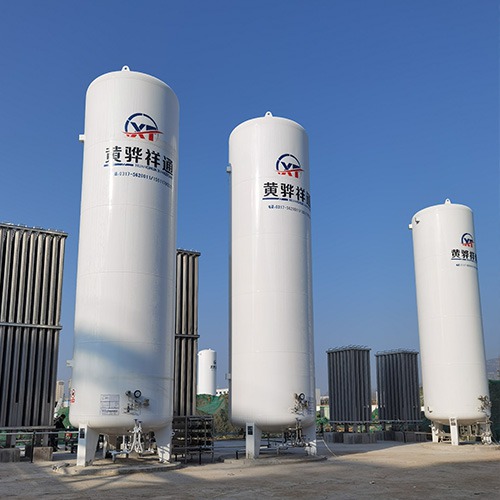
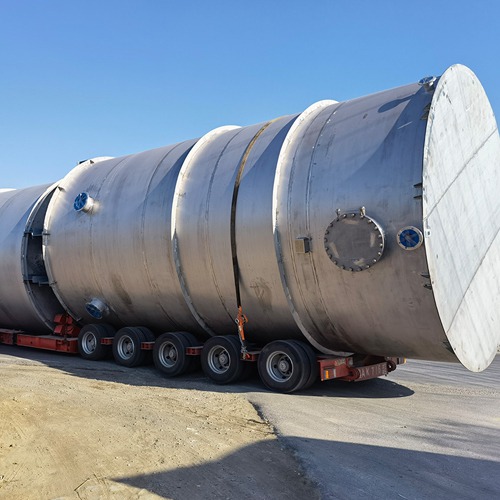
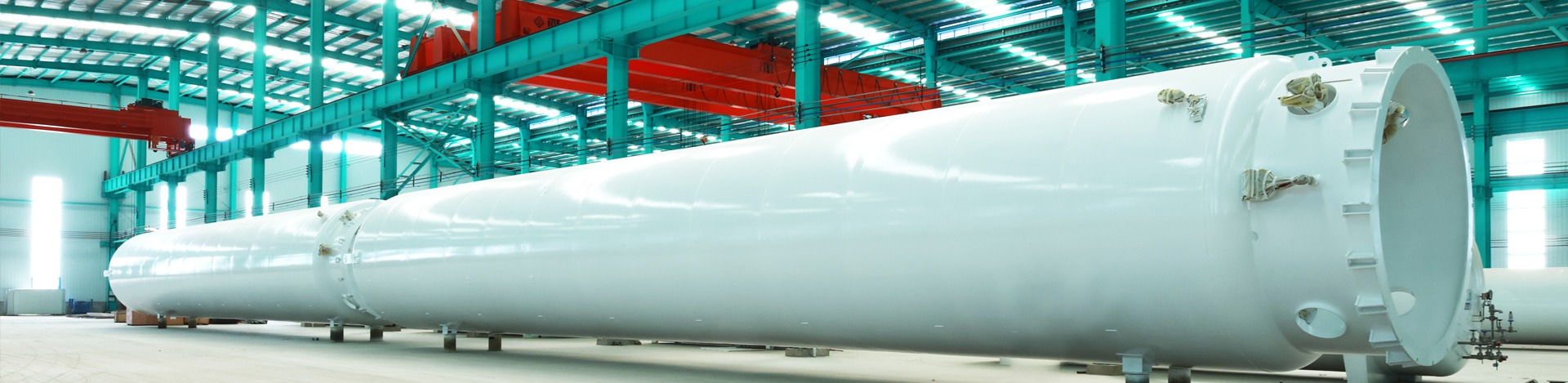
(1) Hazard analysis of LNG storage tank area (1) LNG is stored in LNG storage tanks and is in a boiling state. At the end of some pipelines and liquefaction sections in the LNG storage tank area, it is close to boiling state. External heat input can cause gasification and high pressure, resulting in the opening of the safety valve or causing major damage. Rolling: Due to the different composition and density of LNG in the storage tank, stratification occurs, and mass and heat transfer occur between the two layers, ultimately completing mixing while evaporating on the surface of the liquid layer. This evaporation process absorbs heat from the upper liquid, causing the lower liquid to become overheated. When the densities of two liquids are close to equal, they will suddenly mix at a suitable speed and produce a large amount of gas in a short period of time, causing the pressure inside the storage tank to rise sharply and even opening the safety valve. To avoid this danger, special measures should be taken: ① Light LNG is fed from the bottom of the tank, or heavy LNG is fed from the top of the tank, or a combination of both; ② Install an automatic density meter in the slot to detect layers of different densities; ③ Use a pump in the tank to circulate the liquid from bottom to top; ④ Maintain the nitrogen content of LNG below 1% and closely monitor the gasification rate. (2) Due to LNG being a cryogenic liquid with a temperature of -162 ℃, direct contact between the skin and the surface of low-temperature objects can cause serious injuries in LNG gas cylinder storage tanks. When in direct contact, moisture on the surface of the skin condenses and adheres to the surface of low-temperature objects. The skin and tissues below the skin freeze, making it easy to tear and leave wounds. After bonding, the skin can be thawed by heating and then peeled off. At this point, if the skin is forcefully torn off the low-temperature surface, it will tear this part of the skin apart. Low temperature liquids have lower viscosity and can penetrate textiles or other porous fabrics faster than other liquids such as water. When handling anything that comes into contact with or has come into contact with low-temperature liquids or vapors, if non absorbent gloves (made of PVC or leather) are not worn and the gloves are not loose, the gloves are not easy to remove when liquid splashes onto or seeps into the gloves. If there is a possibility of intense spraying or splashing, do not use a face mask or goggles to protect your eyes. Low temperature accidents may occur. (3) Due to low-temperature operation, the leakage of LNG can cause significant shrinkage of metal components. Leakage and boiling evaporation can occur at any part of the pipeline system, especially at welds, valves, flanges, fittings, seals, and cracks. If these vapors are not sealed in time, they will gradually rise and spread far away, making it easy to encounter potential sources of fire, explosions, low temperatures, and other accidents. (4) Low temperature anesthesia does not have sufficient protective measures. After staying below 10 ℃ for a long time, there is a risk of low temperature anesthesia. As body temperature decreases, physiological function and intellectual activity decline, heart failure, and further decline can lead to death. (5) Breathing LNG low-temperature vapor through suffocation is harmful to health. In the short term, it can lead to difficulty breathing, and over time, it can have serious consequences. Although LNG vapor is not toxic, its low oxygen content can easily cause suffocation. If pure LNG vapor is inhaled and not released at a suitable speed, one will quickly lose consciousness and die after a few minutes. When the oxygen content in the air gradually decreases, the operators have no feeling or warning. By the time you realize it, it will be too late. There are four types of suffocation:. A、 Scenario 1: Oxygen content of 14% to 21% (volume content, the same below), accelerated breathing and pulse, accompanied by muscle twitching. B、 Scenario 2: Oxygen content of 10% to 14%, accompanied by hallucinations, fatigue, and delayed response to pain. C、 Scenario 3: Oxygen content of 6% to 10%, accompanied by nausea, vomiting, fainting, and brain damage. D、 Scenario 4: Oxygen content below 6%, accompanied by spasms, respiratory arrest, and death. Usually, an oxygen content of 10% is the lower limit for the human body to prevent damage. Correspondingly, normal air contains 52.4% methane, with an oxygen content of 10%. Therefore, we advise everyone not to enter LNG vapor. (2) The storage and transportation methods of liquefied natural growth gas storage tanks, as a clean energy source, are increasingly used in people's daily lives. The market demand for LNG is constantly increasing, and its industrial scale is also constantly growing. Various technologies related to the extraction, liquefaction, storage and transportation of natural growth gas have been significantly improved, showing a good development momentum. However, there are also some issues that cannot be ignored in this process waiting for people to solve. For example, the storage and transportation of LNG is an important technology that requires further technological development and management measures to protect the safety of LNG storage and transportation. Therefore, the research on LNG storage and transportation is of great significance. The storage and transportation of natural growth gas is an important task. Currently, there are three main methods for storing and transporting natural growth gas, and the specific types are as follows. 1. The current market for transporting liquefied natural growth gas (LNG) by tanker trucks is generally cylindrical in shape, with thin inner and outer layers and light weight. Therefore, the LNG that can be transported will have a large mass. When analyzing the overall structure of the tanker, it is found that there are significant uncertainties during the transportation of LNG. However, tank trucks also have the advantages of convenient and fast transportation of LNG, and more importantly, they are not limited by geographical areas, overcoming the problem of insufficient natural growth gas in many areas with inconvenient transportation. 2. The main issue in the transportation of LNG by ship is to choose materials suitable for low-temperature media and to prepare preventive and control measures for possible problems that may occur during the transportation of LNG. If LNG leakage occurs in the LNG cargo hold during ship transportation, measures should be taken to protect the materials from leaking out within the specified time. So in many cases, a leak proof layer is designed outside the transport cabin to prevent LNG leakage. The prescribed time is set at half a month, mainly to protect the evaporation capacity of LNG from being too large. 3. Pipeline transportation of LNG is currently one of the most commonly used LNG transportation methods, with approximately three-quarters of LNG transportation worldwide using pipeline transportation. Due to the low boiling point of LNG at 160 ℃, it is necessary to prevent the occurrence of LNG expansion during transportation, which may pose a threat to the transportation of natural growth gas. Therefore, it is determined to take certain measures to protect the lower transportation temperature during pipeline transportation.