








LNG storage tank safe operation specifications and characteristics
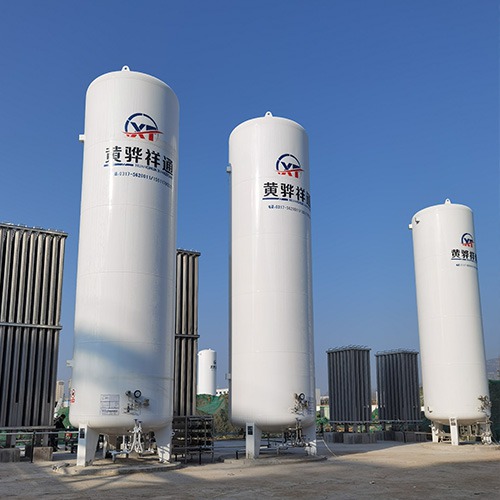
(1) During the application of liquid oxygen storage tanks, it is important to keep in mind the Anran operating standards. The Anran operating standards for low-temperature storage tanks are a concern for every enterprise in the market. As the substances stored in this equipment are prone to risk events, the Anran operating standards are also very important. However, in practical use, how to confirm the Anran function of liquid oxygen storage tanks? In industrial applications, liquid oxygen storage tanks are commonly used to store liquid oxygen. Based on the relevant characteristics of liquid oxygen, there are some things to pay attention to when using storage tanks to confirm the storage effect and safety. When using liquid oxygen storage tanks to store liquid oxygen, it is necessary to confirm that the inner cavity of the tank needs to be cleaned once a year to avoid corrosion of the tank wall by liquid oxygen. Before cleaning the storage tank, it is necessary to thoroughly remove the liquid oxygen from it. The discharge should be carried out according to the method, and then neutral detergent should be used for cleaning operations. After cleaning with detergent, a lot of clean water should be used for secondary flushing. Liquid oxygen storage tanks cannot be put into use immediately after cleaning. It is necessary to confirm that the water inside the tank is dry, and pay attention to the temperature of the washing solution and flushing water. As the storage tank stores liquid oxygen, it is necessary to confirm the low temperature requirements. Therefore, the temperature of the cleaning liquid should generally not exceed 40 degrees Celsius. If the temperature is too high, it will affect the function of the storage tank. It is necessary to properly label the low-temperature storage tanks for storing liquid oxygen, in order to have a specific understanding of the storage conditions. Liquid oxygen storage tank is a device that stores low-temperature liquids under high vacuum. During operation, it is important to pay attention to relevant maintenance methods to ensure that the storage effect of the tank is fully utilized and to extend the service life of the equipment, thereby reducing the frequency and cost of equipment replacement for enterprises. Before storing a large amount of liquid oxygen in a storage tank, it is necessary to inject an appropriate amount of liquid oxygen to pre cool the tank. After confirming that the temperature inside the tank is at an appropriate level, a lot of liquid nitrogen filling can begin. The environment of the storage tank location should be kept dry and well ventilated. During the storage of liquid oxygen in the tank, it is necessary to minimize the number of times the lid is opened. It is also important to observe whether the neck plug is frozen during normal times. If it is, it should be removed in a timely manner, and the insulation of the tank body should be checked to confirm whether it is suitable to continue storing liquid oxygen. (2) Only by understanding and mastering the characteristics of liquefied natural growth gas can the production and transportation of natural growth gas storage tanks be carried out based on its features. 1. The basic properties of LNG are that it is mainly composed of methane, which has flammable properties and definite compressibility, and can be easily compressed into liquid form. And methane has a relatively low density, no toxicity, and no corrosiveness. The boiling point of methane at room temperature and pressure is 162 degrees [o}. When the leakage of methane in the air reaches 5% to 15%, it will explode when mixed with oxygen. The composition of natural growth gases includes small amounts of other gases besides methane, usually alkanes such as ethane and propane, as well as nitrogen and so on. 2. The characteristics of LNG flammability are that methane, the main component of LNG, is a flammable gas that remains flammable even after liquefaction into a liquid. Methane can burn at around 160 ℃, with a combustion rate of approximately 0.3m/s and a volume ratio fluctuating around 6% to 13%. Based on this, LNG and BOG will not spontaneously ignite and cause explosions when there is a normal storage space requirement that meets natural growth gas. But after liquefied natural growth gas comes into contact with a fire source, it will slowly burn at a low speed at the beginning, and the combustion will become more extensive over time, which leads to an increase in the contact between LNG and oxygen. Assuming that the space size during natural growth gas combustion is limited, natural growth gas may mix with air in the environment. Once the mixture reaches the conditions for explosion, an explosion will occur. Therefore, it is determined that the places where natural growth gas is used should have a determined space size for protection. 3. The low-temperature characteristics of LNG. Under normal environmental conditions, the boiling point of natural growth gas is around 160 ℃. Based on this characteristic, LNG can be stored in a low-temperature and atmospheric pressure environment. However, it should be noted that low-temperature environmental conditions can store LNG, but the use and transportation of LNG are also limited by low-temperature conditions. In addition, various treatments of LNG also require low-temperature environments. Therefore, for the processing equipment and transportation pipeline materials of liquefied natural growth gas, their functions should be protected from high temperatures. It is necessary to avoid problems such as LNG leakage, serious accidents, and even explosions caused by improper handling of these materials due to their inability to adapt to low temperatures during work. Then, it is required that the LNG storage and transportation equipment can operate at a constant low temperature. The most commonly used storage and transportation equipment now is BOG tanks, but this type of tank may experience cold shrinkage due to the nature of the parts or the tank body in a lower temperature environment. Therefore, it is necessary to inspect the BOG tanks during the LNG storage and transportation process to protect the LNG storage and transportation.