








Comparison characteristics and current usage status of LNG storage tanks and ordinary storage tanks
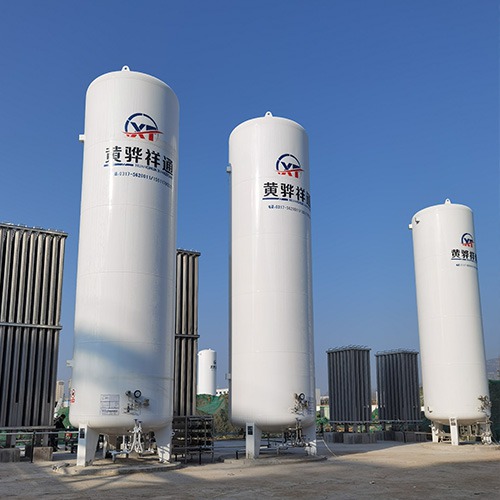
{1} Compared with ordinary storage tanks, LNG storage tanks are commonly used items in our production. Therefore, LNG storage tanks, as a new type of storage tank, are believed to be quickly accepted by a large number of users. Compared with ordinary storage tanks, LNG storage tanks are more suitable for use. LNG storage tanks can be divided into small LNG storage tanks according to their size, with a capacity of 5-50 cubic meters, often used in civil gas vaporization stations, liquefied natural gas (LNG) vehicle refueling stations, etc; Medium sized LNG storage tanks have a capacity of 50-100 cubic meters and are often used in satellite liquefaction facilities, making them a better alternative to conventional storage tanks. 1. The storage system of LNG storage tanks consists of low-temperature storage tanks, subordinate pipelines, and control instruments, but it also belongs to the category of low-temperature storage tanks. 2. Austenitic stainless steel pipes are commonly used for LNG storage tank pipelines. Austenitic stainless steel pipes have good low-temperature performance. 3. According to different placement forms, it can also be separated vertically (LNG); The storage tank adopts vacuum powder insulation technology for insulation. The inner cylinder and pipeline materials of the storage tank are made of austenitic stainless steel, and the outer cylinder is made of high-quality carbon steel Q345R pressure vessel steel plate. This type of LNG storage tank not only has a long lifespan, but also has been widely recognized for its good performance. {2} With the rapid development of technology, the application scope of LNG storage tanks will become more extensive. At present, LNG storage tanks have been applied in many industries such as chemical engineering, metallurgy, petroleum, installation and maintenance, and transportation, and the number of applications in people's lives will continue to increase. This requires continuous improvement and innovation in the manufacturing quality of LNG storage tanks. LNG storage tanks involve interdisciplinary and comprehensive disciplines. From determining performance parameters to putting LNG storage tanks into use, it requires the joint efforts of engineering and technical personnel from all aspects. Once LNG storage tanks fail, it will bring huge disasters to the country and the people. So the non-destructive testing method for LNG storage tanks is one of the means to protect the excellent operation of LNG storage tanks. Whether defects affecting the use of LNG storage tanks can be discovered during the inspection process is the key to protecting the inspection process. The ability of inspection technicians to master inspection techniques also plays a decisive role in the detection of LNG storage tanks. Any errors in inspection may lead to catastrophic accidents in LNG storage tanks. The inspection of LNG storage tanks involves a lot of knowledge, including the design, materials, welding, non-destructive testing, heat treatment, corrosion and other disciplines of LNG storage tanks. The use of natural growth gas storage tanks involves many industries such as aviation, aerospace, nuclear industry, petroleum, chemical, transportation, and papermaking. According to statistics from 2003, there were a total of 1.222 million pressure vessels in China at that time, and 250000 pressure vessels were produced and put into use every year. Statistics in the past decade indicate that the total number of pressure vessels in China is growing at a rate of 26000 units per year, with a growth rate of 2.4%. According to statistical data, a significant portion of newly manufactured pressure vessels each year are used for replacing and replacing old equipment. With the rapid development of productivity in our country and the continuous improvement of national supervision work, the management of pressure vessels has become more perfect and mature, and high requirements have been put forward for the production, manufacturing, installation, use, and transformation of pressure vessels. Therefore, accidents involving pressure vessels have also been greatly reduced. However, the accident rate per 10000 units of pressure vessels in China is still higher than that in developed countries. Therefore, in order to lower the accident rate per 10000 units of pressure vessels compared to developed countries, more efforts are needed. In short, non-destructive testing technology plays an important role in the manufacturing and use of pressure vessels. The detection of LNG storage tanks is not used in general industrial production. Although it does not directly generate economic benefits, it plays an important role in preventing malignant accidents and protecting people's lives and property. The losses caused by an LNG storage tank explosion cannot be compensated by the cost of thousands of inspections. Therefore, the use of LNG storage tanks is not only the protection of people's lives and property, but also the protection of enterprise economic benefits. Regular inspection of LNG storage tanks is one of the means to protect their operation. With the development and innovation of technology, detection technology is constantly improving, and the automation level of acoustic emission and magnetic leakage technology is also constantly improving. Therefore, the application scope of non-destructive testing technology will also be expanded.