


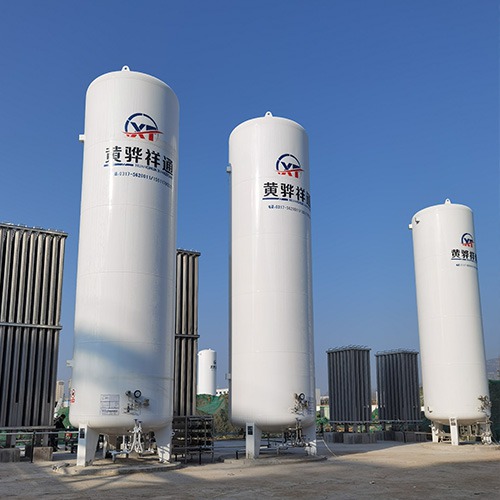
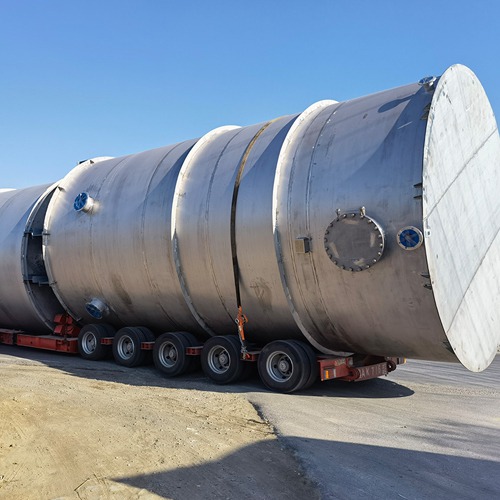





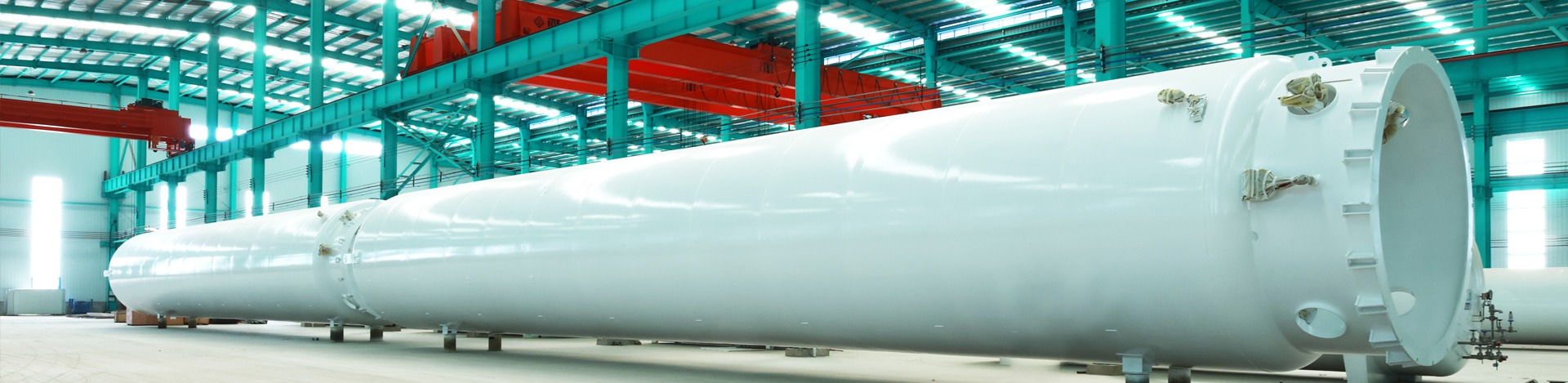

The component characteristics and maintenance methods of low-temperature storage tanks are very important
[1] The component characteristics of LNG low-temperature storage tanks: 1. The inner tank wall is the main component of LNG storage tanks, which is welded from steel plates that are resistant to low temperatures and have good mechanical properties. Generally, special steel such as A5372 grade, A516Gr.60, Gr18Ni9, ASME 304, etc. are selected. If the bottom plate and ring plate of a certain tank are made of steel plates with a thickness of 16mm and a material of A537CL2, the remaining plates can be made of steel plates with a thickness of 6.35mm and a material of A537CL1. 2. Polyurethane foam is sprayed on the inner side of the cold insulation outer tank lining plate of the cold insulation layer tank wall. Generally, the thermal conductivity of polyurethane foam is required to be ≤ 0.03W/(m · K), the density is 40~60kg/m3, and the thickness is about 150mm. The top insulation of the tank adopts a suspended rock wool insulation layer. For example, a certain tank top is equipped with 4 layers of glass fiber insulation layers, each layer is 100mm thick, with a density of 16kg/m3 and a thermal conductivity of 0.04W/(m · K). Cold insulation at the tank bottom The cold insulation at the tank bottom is relatively complex. In addition to the polyurethane foam sprayed under the steel plate, the waterproof (mainly based on the actual report) structure should be designed. The following figure shows the cold insulation structure at the bottom of a certain tank, including a 65mm thick cushion layer, 60mm thick dense concrete, 2mm thick waterproof (based on actual reports) felt, 2 layers of 100mm thick foam glass, and later covered with 70mm thick concrete to protect the outer tank concrete from the influence of low temperatures. 3. The concrete outer tank wall and top are composed of prestressed reinforced concrete and low-temperature resistant steel lining plates. The concrete strength should be ≥ 25MPa. The top and walls of the outer tank should be able to withstand the internal pressure caused by accidental gas leakage, therefore, reinforced concrete should have sufficient tensile strength. For large storage tanks, in order to balance the stress on the prestressed concrete tank wall, the design method of equal strength but unequal thickness or equal thickness but unequal strength can be adopted. [2] The maintenance method of liquid ammonia storage tanks is very important. When the consumption rate of liquid nitrogen is too fast or there are water droplets or white frost near the neck of the liquefied natural growth gas storage tank, it indicates that the insulation function of the tank is malfunctioning and liquid nitrogen cannot be retained. The specimens placed in the liquid ammonia storage tank should be properly labeled, and the retrieval and placement should be stable, accurate, and fast. The liquid ammonia storage tank should be handled gently to prevent collision and compression. When moving, it should not be dragged on the ground and should be lifted. It should be stored in a dry and well ventilated room to prevent moisture. The inner cavity of the liquid ammonia storage tank should be cleaned once a year to prevent erosion of the tank wall. Before cleaning, the liquid nitrogen inside the tank should be drained and left indoors for 2-3 days to preheat to room temperature. Then, it should be washed with neutral laundry detergent and rinsed clean with clean water to control dryness. The temperature of the cleaning solution and clean water should not exceed 40 ℃ to prevent overheating from affecting the function of the tank. Liquid ammonia storage tanks should be transported and opened as few times as possible. If transportation is required, it is necessary to fix them with ropes on the truck compartment, keep them upright, be careful not to fall, overturn, or lie horizontally, and try to prevent severe vibration. The liquid ammonia storage tank is a highly vacuum refrigerator. When using and maintaining the liquid ammonia storage tank, the following points should be taken into account: check the neck plug and neck plug groove at any time, remove the ice on the neck plug in a timely manner, and do not place plastic cloth or other substances on the neck plug to increase sealing and protect the functionality of the liquid ammonia storage tank. The extension of the usage time of liquid ammonia storage tanks is not groundless. There are definite methods, and I can tell you these methods without reservation: before use, a small amount of liquid nitrogen should be injected to pre cool it, and when the temperature inside the tank reaches liquid nitrogen temperature, liquid nitrogen should be filled until the tank is full.